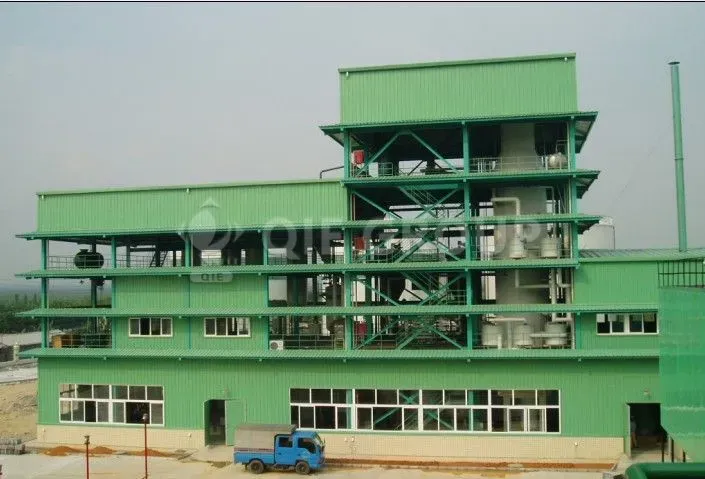
A complete peanut oil production line encompasses a fully automated solution covering the entire process from raw material cleaning and conditioning to pressing/leaching for oil extraction and refining. As a turnkey factory solution provided by the QIE Group, we tailor a complete process solution for you, from pretreatment to finished oil packaging.
First, the peanut raw materials undergo a cleaning process to remove impurities, resulting in clean oilseed raw materials. Then, they enter the conditioning system where they undergo a Maillard reaction at high temperature (approximately 150°C) to generate a unique nutty aroma.
Key equipment in the pretreatment section includes:
The "one-stop" service provided by QIE Group means that customers do not need to deal with multiple suppliers, from process design, factory layout planning, equipment manufacturing to on-site installation and commissioning, and employee training, ensuring a high degree of consistency in the entire production line logic.
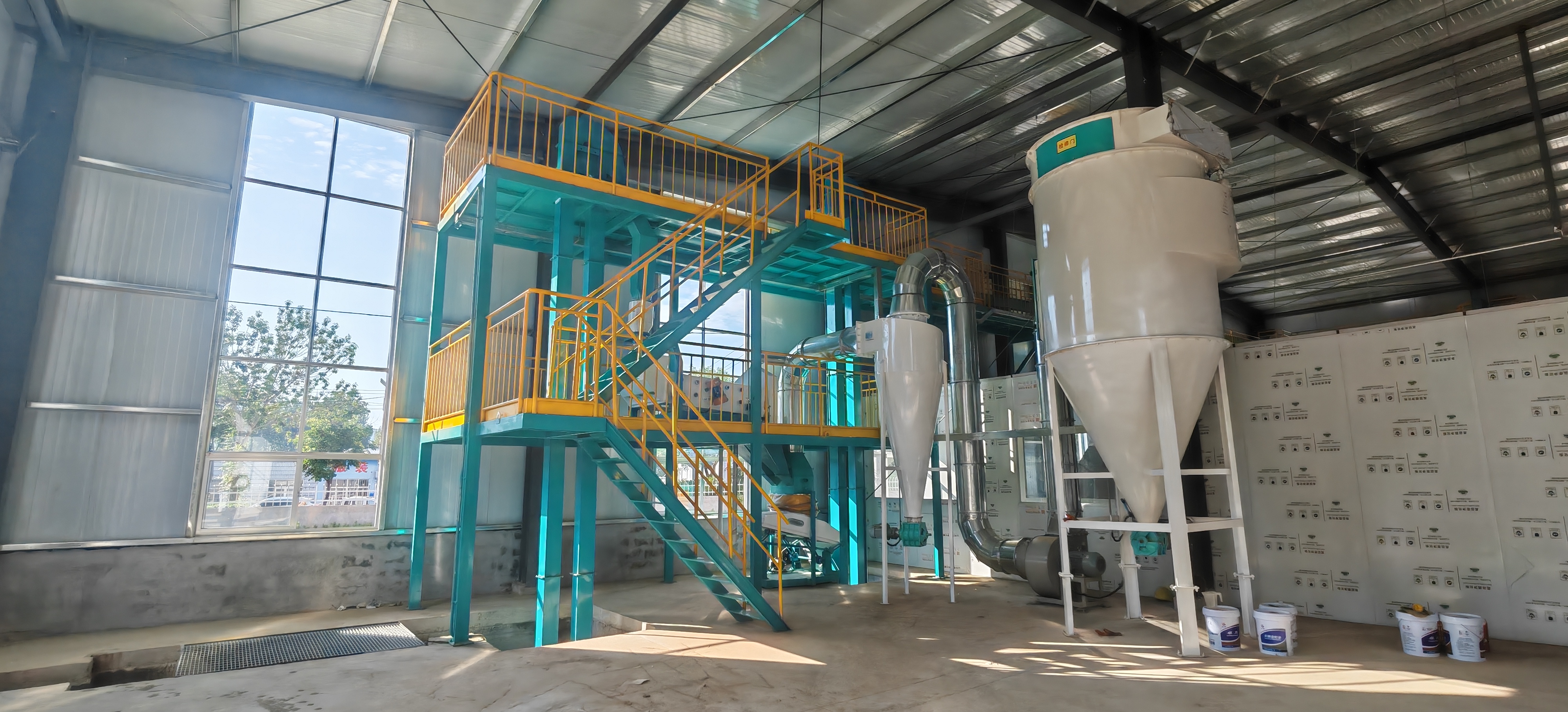
QIE's core technologies are designed around yield, solvent economy, and thermal efficiency. For peanut kernels (typically with an oil content of 45-52%), our pre-pressing + solvent extraction process can stably achieve an oil recovery rate of 98-99%, with residual oil content in the meal ≤0.8-1.0% (dry basis). In the full-press unit, optimized screw geometry and dynamic back pressure control can control the residual oil content in the pressed cake to 6-8%, outperforming traditional presses while reducing wear.
QIE Group employs advanced extraction and refining technologies to ensure high oil yields. In the extraction stage, we typically use a combined pre-pressing and solvent extraction process. Pre-pressing uses a screw press to initially extract some oil, followed by solvent extraction to further extract the remaining oil. The residual oil content of the oil cake/meal after solvent extraction is consistently ≤0.5%, indicating an extremely high total oil yield. In the refining process, we utilize advanced degumming, deacidification, decolorization, and deodorization technologies to effectively remove impurities and improve oil quality. Simultaneously, our equipment prioritizes energy optimization, employing a highly efficient heat recovery system to increase system heat utilization by 10-15%, reducing production costs and bringing you greater economic benefits.
QIE Group employs advanced extraction and refining technologies to ensure high oil yields. In the extraction stage, we typically use a combined pre-pressing and solvent extraction process. Pre-pressing uses a screw press to initially extract some oil, followed by solvent extraction to further extract the remaining oil. The residual oil content of the oil cake/meal after solvent extraction is consistently ≤0.5%, indicating an extremely high total oil yield. In the refining process, we utilize advanced degumming, deacidification, decolorization, and deodorization technologies to effectively remove impurities and improve oil quality. Simultaneously, our equipment prioritizes energy optimization, employing a highly efficient heat recovery system to increase system heat utilization by 10-15%, reducing production costs and bringing you greater economic benefits.
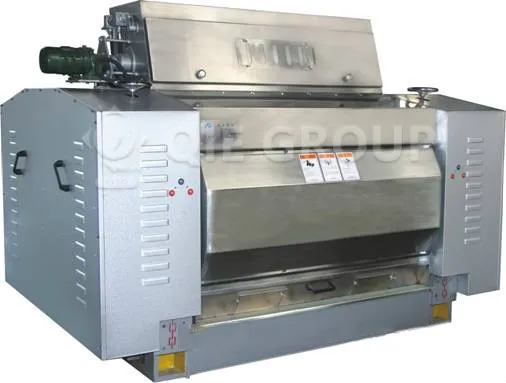
A high-performance production line combines mechanical reliability with precise process control. The QIE Group manufactures or integrates the following core equipment, designed with durability, ease of cleaning, and energy efficiency in mind:
The key components of an automated peanut oil production solution include a series of core equipment.
The washing machine is used to remove impurities and dirt from the surface of peanuts, ensuring the cleanliness of the raw materials.
The crusher breaks peanuts into suitable particle sizes for easier subsequent processing. The flaking machine can further press the crushed peanuts into thin flakes, increasing the surface area for oil release.
Oil presses are key equipment for extracting oil. We offer a variety of options, including screw oil presses, which can efficiently extract oil. Filters are used to remove impurities from crude oil, improving its purity.
In addition, there are steaming and frying pans, extractors, refining equipment, etc. These devices work together to form a complete automated peanut oil production system.
QIE Group equipment is manufactured using high-quality materials, offering excellent sustainability and durability, and providing reliable support for your production.
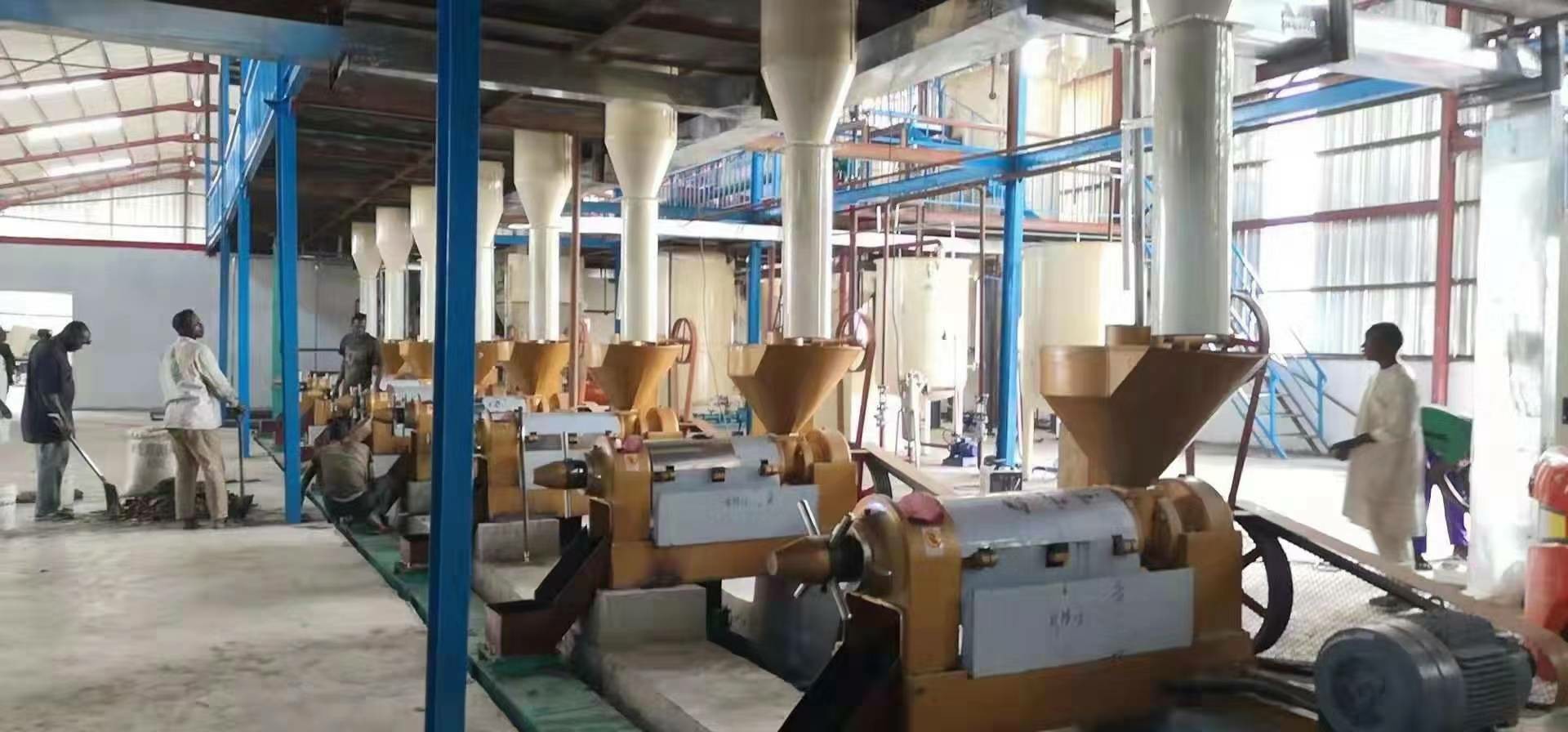
QIE Group has delivered multiple turnkey peanut oil projects in Africa, Southeast Asia, Central Asia, and other regions. Our team works with local partners to manage complete EPCM or EPC contracts and adapts designs to raw material differences, climate, and regulatory frameworks.
QIE Group has successfully installed turnkey oil mill projects in numerous countries and regions worldwide. In Africa, we have built efficient peanut oil production lines for local businesses, helping them improve production efficiency and meet local market demand for peanut oil. In Southeast Asia, our production lines have won high recognition from clients due to their advanced technology and stable performance. In Central Asia, our projects have also contributed to the development of the local oilseed industry. We can provide real photos of these plants, showcasing the operation and actual results of the production lines. These success stories fully demonstrate QIE Group's professional strength and rich experience in peanut oil production. Choosing us will provide you with reliable solutions and high-quality service.
.jpg)
Investing in a peanut oil production plant is a medium- to long-term strategy. Its costs are primarily driven by the following three factors:
Capacity: Economies of scale reduce the cost per ton of production.
Automation level: Higher initial investment can significantly reduce subsequent labor costs and management losses.
Refining level: The complexity of the refining process is determined by the target market (primary or secondary oil).
The cost of peanut oil production is influenced by various factors, primarily including production capacity, automation level, and refining grade. Higher production capacity generally leads to higher equipment investment and operating costs, but may result in lower unit production costs. Higher automation levels require larger upfront equipment investments but improve production efficiency and reduce labor costs. Higher refining grades place stricter requirements on equipment and processes, thus increasing costs accordingly. QIE Group has a professional team that can provide you with detailed cost estimates and ROI analyses based on your specific needs. For a detailed quote, please feel free to contact us; we are dedicated to serving you. Choosing QIE Group means choosing professional, efficient, and sustainable peanut oil production solutions.
Customized 3D factory layout
Detailed Energy Consumption and Profit Calculation Table
One-on-one technical consultation with senior engineers
Answer: The investment cost of a peanut oil production plant is affected by a variety of factors. Key variables include: the level of automation (semi-automatic vs. fully automatic PLC control), the refining grade (whether it needs to meet Grade 1 edible oil standards), and the daily processing capacity . Typically, a fully automated turnkey production line of 10-50 tons/day includes not only pressing equipment but also cleaning, conditioning, and refining systems.
Answer: It largely depends on your production scale and business objectives.
Pressing method: suitable for scales of 10-50 tons/day , it can better preserve the original rich aroma of peanuts and is suitable for producing high-quality, natural peanut oil.
Leaching: Suitable for industrial-scale operations of 50 tons/day or more . Its core advantage lies in its low residual oil rate (residual oil in the meal can be reduced to below 1%), which greatly increases oil yield and reduces raw material loss. QIE Group's turnkey solutions can flexibly match the most scientific extraction process according to your raw material costs and market positioning.
Answer: The high oil yield stems from precise pretreatment and efficient pressing technology. QIE Group's production lines are equipped with patented rolling mills and multi-stage temperature-controlled steaming and roasting pans , ensuring that peanuts reach their optimal physical state before entering the oil press. Our industrial-grade oil presses use special alloy steel and, through precise pressure gradient calculations, significantly reduce the residual oil content in the oil cake. Furthermore, the fully automated control system monitors material flow and pressure in real time, preventing oil loss due to human error.
Answer: Factory design must comply with food safety standards and industrial building codes.
Spatial layout: It needs to be divided into raw material area, pretreatment workshop, pressing/leaching workshop, refining workshop and finished product warehouse.
Utilities: Require a stable power supply, sufficient industrial water (for cooling and refining), and a steam heat source (such as a boiler). QIE Group provides plant design and planning services . We utilize 3D modeling technology to optimize piping routes and equipment layout based on your site dimensions, achieving maximum production efficiency with minimal footprint.
Answer: As a leading global supplier of grease trap machinery, the QIE Group provides full lifecycle service support. This includes:
On-site installation: The equipment assembly and piping connection are handled by an experienced team of engineers.
Commissioning and training: Conduct on-site trial operation with materials and provide your technical workers with training on equipment operation, troubleshooting, and daily maintenance.
Technology Upgrades: Lifetime spare parts support and process optimization suggestions ensure your production line remains competitive even after many years of operation.