The core of peanut oil refining is not just removing impurities, but selectively removing phospholipids, free fatty acids (FFA), pigments, and volatile odor substances from crude oil without damaging its nutrition and flavor.
In the international market, peanut oil is generally divided into two main categories:
• Richly aromatic peanut oil (tastes great, retains the natural nutty aroma)
• Grade 1 refined peanut oil (stability and standardization, widely used)
Depending on the different refining processes used for strong-aroma peanut oil and first-grade oil, investors can choose the refining process that best suits their needs.
Standard peanut oil refining process
The refining process typically includes four core steps:
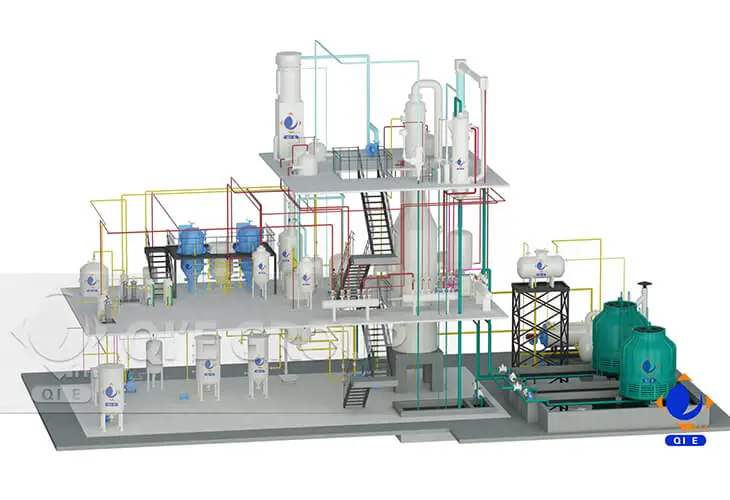
Degumming → Deacidification → Decolorization → Deodorization
Degumming: Removes phospholipids and gum impurities.
Deacidification: Reduces the content of free fatty acids and improves stability.
Decolorization: adsorbs pigments and oxidation products
Deodorization: Removes volatile odor substances
Note: The specific process intensity and configuration will vary greatly depending on the product positioning and the differences in oil quality.
Rich Aroma Peanut Oil Process Design
Core idea:
Lightly refined to retain flavor to the greatest extent.
• Degumming: Use cold filtration or gentle hydration to remove only part of the phospholipids, avoiding strong acid treatment that could damage the flavor precursors.
• Deacidification: This is usually not carried out; the acid value is maintained by controlling the quality of the raw materials.
• Decolorization: No decolorization or slight decolorization may be performed to retain the natural amber color.
• Deodorization: This is strictly prohibited to prevent the removal of key aroma compounds by high temperatures.
Key engineering control points: low-temperature operation, shortened residence time, and extremely high requirements for the quality of raw peanuts.
First-grade peanut oil processing
Core idea:
Refining the entire process
• Degumming: Hydration or acid refining + centrifugal separation, which basically removes all phospholipids.
• Deacidification: Deacidification by alkali refining (chemical refining) or physical distillation can control the acid value to ≤ 0.1 mgKOH/g.
• Decolorization: Vacuum adsorption with activated clay improves transparency and removes oxides.
• Deodorization: High temperature (180–240°C) + high vacuum steam stripping removes odors.
Key engineering control points: high vacuum system (≤ 3 mmHg), heat recovery system, and precise temperature control.
Key technical parameters for peanut oil refining
| Process |
Key parameters |
Target/Result |
| Degumming |
70–90°C / Add 1–3% water |
Residual phosphorus < 10 ppm |
| Alkali refining and deacidification |
Alkali solution 12–18 °Bé / 60–80 °C |
Removal efficiency ≥ 95% |
| Physical deacidification |
220–240°C / Vacuum ≤ 3 mmHg |
Low energy consumption and high efficiency |
Process selection determines market competitiveness
A successful peanut oil refining process must be tailored to the target market, raw material quality, regulatory requirements, and long-term operating costs. Customized solutions can typically achieve energy savings of 10–15% and reduce oil loss by 0.2–0.5%.
Frequently Asked Questions about Peanut Oil Refining
Q1: What are the main differences between rich-flavored peanut oil and refined peanut oil?
The main difference lies in the degree of processing. Richly flavored peanut oil is lightly refined to retain its flavor, while refined peanut oil undergoes a full refining process to improve stability and consistency.
Q2: Is deodorization always necessary during the refining process of peanut oil?
Not necessarily. Grade A peanut oil must be deodorized to raise its smoke point, while rich-aroma peanut oil should avoid deodorization to retain its core natural aroma.
Q3: Should peanut oil be chemically refined or physically refined?
Chemical refining (alkali refining) is more adaptable and suitable for situations where the acid value of raw materials fluctuates greatly; physical refining is more energy-efficient and suitable for large-scale continuous production of high acid value oils.
Get your customized peanut oil refining solution
We offer quotations for energy-efficient intermittent, semi-continuous, and fully continuous refining production lines to meet different capacity requirements ranging from 10 to 500 TPD.
Get a quote now
QIE GROUP - Professional manufacturer and exporter of grease and oil machinery