How to start a peanut oil production line project?
Planning a high-efficiency, sustainable, and compliant peanut oil production line requires a structured approach: market and raw material assessment, process route selection, capacity and plant layout, budget and return on investment model, and quality and compliance system. This is followed by the engineering design and delivery phase. QIE GROUP, with its turnkey contracting capabilities, provides integrated services covering solution design, core equipment, installation and commissioning, personnel training, and after-sales maintenance, helping users clearly understand how to start a peanut oil production line project from scratch.
I. From a business perspective: Project feasibility and positioning
Define your target market (local retail, catering, industrial customers, or export), pay attention to peanut oil quality preferences (cold-pressed, highly aromatic or light-colored, neutral), and compliance requirements. Identify the source of raw materials (local/imported), seasonality, and oil content. The oil content of raw peanut seeds is typically 40%–48%, while the kernel content can reach 45%–52%. This is the core input for setting oil yield targets and profit models.
For teams preparing to start a peanut oil production line, it is recommended to conduct a 3-6 month sales pilot and small-scale contract manufacturing to verify the taste and distribution channels before making a production line investment decision. QIE GROUP can provide trial formulas and laboratory refining verification to shorten the initial exploration period.
II. Process route selection: cold pressing, hot pressing, pre-pressing leaching, and full leaching
Different routes are suited to different market positioning and production capacity targets:
- Cold pressing : Pressing at low temperatures preserves the original aroma of peanuts and results in lower levels of impurities and free fatty acids (FFA), making it suitable for high-end edible oils. However, the oil yield is lower than hot pressing, and the residual oil content in the pressed cake is higher.
- Hot pressing : After steaming and frying for conditioning, the oil yield is increased and the flavor is more mature and fragrant, making it suitable for mass retail and catering markets.
- Pre-pressing + solvent extraction : Mechanical pre-pressing followed by solvent extraction improves oil recovery rate and is suitable for medium to large-scale production capacity and cost-sensitive markets.
- Full leaching : Suitable for operating conditions with low oil content or those seeking the highest recovery rate, but the process is complex and has higher requirements for safety and environmental protection.
| Dimension | Cold pressing | Hot pressing | Pre-pressing + leaching | Total leaching |
|---|---|---|---|---|
| Adapted production capacity (t/day) | 5–50 | 10–150 | 100–800 | 200–1000+ |
| Residual oil content in pressed cake (%) | 8–12 | 7–10 | ≤1 (Comprehensive) | ≤1 |
| Flavor and color | Original fragrance, light color | Ripe aroma, medium color | Determined by the refining plan | Determined by the refining plan |
| Unit investment and energy consumption | Low investment, low energy consumption | In investment, in energy consumption | Investment is medium to high, and energy consumption is medium to high. | High investment, high energy consumption |
| Compliance and security challenges | Low | Low-medium | Medium to high (solvent/ATEX) | High (solvent/ATEX) |
QIE GROUP will offer a combination of process packages from cold pressing to physical/chemical refining, based on the raw oil profile and target flavor.
III. Core Equipment and Selection Guidelines
Pressing + Refining:
- Raw material section: cleaning (vibrating screen/air classifier), destoner, magnetic separator, metering bin, drying and safe storage.
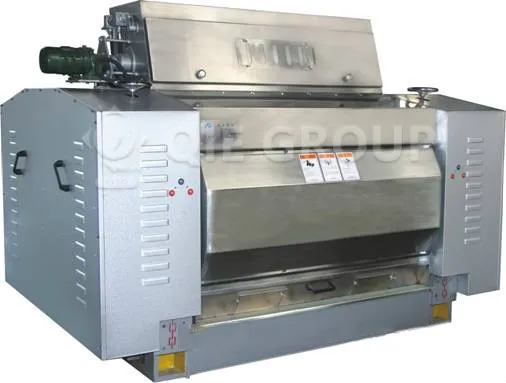
- Pre-treatment: dehulling/sorting, crushing, softening and conditioning, rolling, steaming and roasting (hot pressing).
- Oil pressing and filtration: screw press, primary filter, plate and frame/leaf filter, dehydration.
- Refining (physical/chemical optional): degumming, deacidification, decolorization, deodorization, and, depending on market demand, winterization/dewaxing and deodorization followed by polishing and filtration.
- Auxiliary systems: steam and hot oil systems, cooling water, compressed air, CIP cleaning, wastewater/exhaust gas treatment, and DCS/PLC automation.
IV. Production Capacity, Energy Consumption, and Utility Configuration
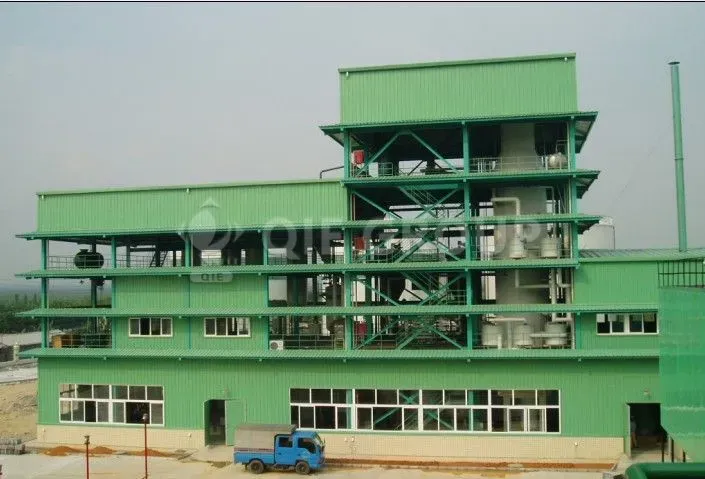
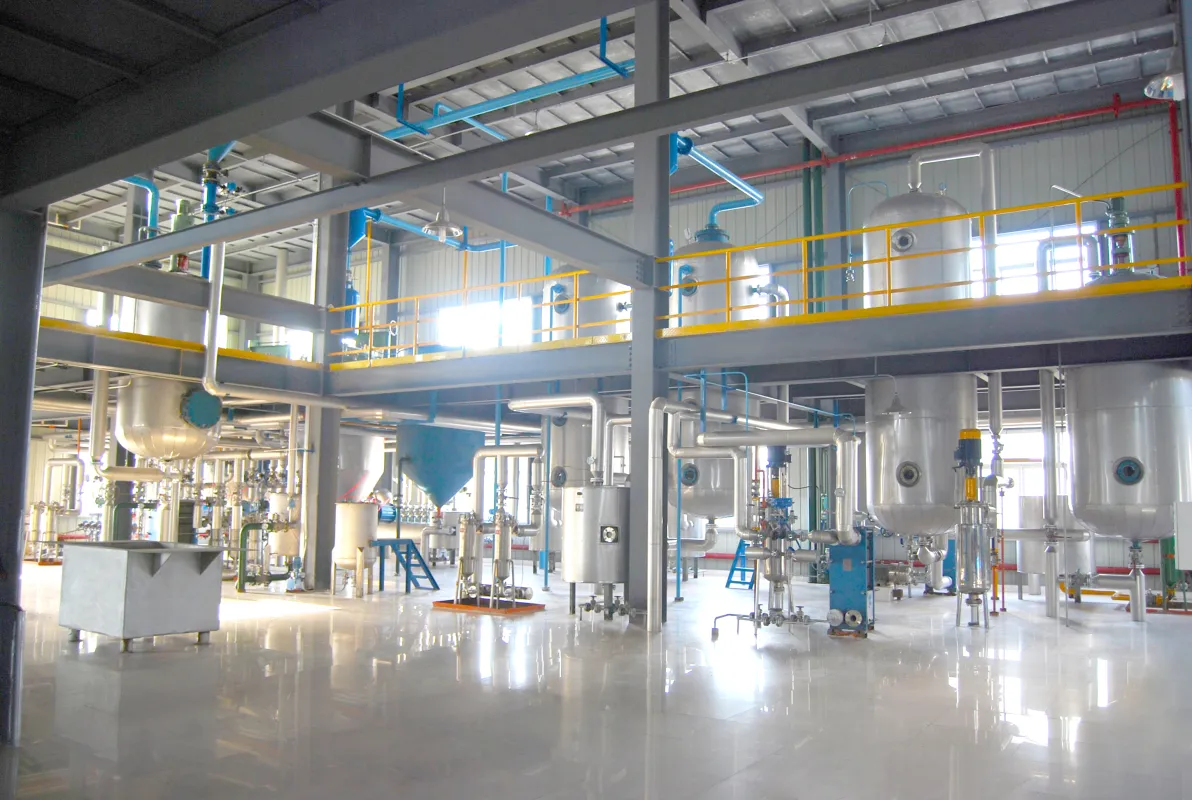
Recommended capacity tiers: 5–20 t/day, 30–100 t/day, 200–500+ t/day. Plant layout should consider bidirectional material flow, fire-prevention zones in tank areas, storage and emergency facilities for hazardous chemicals (solvents/filter aids), truck/container loading and unloading routes, and weighing verification.
| Project Dimension | Reference range | Remark |
|---|---|---|
| Electricity consumption | 30–60 kWh/ton of feed (pressing section) | Related to automation and motor efficiency |
| Steam consumption | 200–450 kg/ton of refined oil (refining section) | Physical refining is generally superior. |
| Process water | 0.3–0.8 m³/ton of refined oil | Includes cooling water makeup and CIP |
| Solvent loss (if applicable) | ≤1.0 kg/ton of oilseed cake | Closed systems and key recovery rates |
| Factory ceiling height and floor area | 9–16 m clear height; medium-sized lines occupy 2000–6000 m² | Including tank farm and utilities |
V. Budget Framework and Return Model (excluding taxes)
For investors planning to start a peanut oil production line, it is recommended to evaluate both CAPEX and OPEX simultaneously.
- CAPEX (Capital Expenditure) consists of : process equipment and instrumentation (approximately 40%–60% of total investment), civil engineering and steel structures (15%–30%), utilities and environmental protection (10%–20%), installation, commissioning and transportation (8%–15%), and engineering and validation costs (5%–10%). The larger the production capacity, the lower the unit investment.
- OPEX (Operating Expenses) structure : raw peanut seeds/kernels (typically 70%–85%), additives and filter media (1%–3%), energy and water (3%–8%), labor and maintenance (5%–10%), and packaging and logistics (3%–8%). Increasing oil yield and reducing residual oil can significantly improve unit costs.
- Cash flow and payback period : Under stable raw material and channel conditions, the static payback period for medium-sized projects is typically 1.5–4 years, depending on the price difference between raw materials and finished products, oil yield, energy consumption, and financial leverage.
VI. Quality and Compliance: Meeting the target market from the design stage
- Food safety system : HACCP, ISO 22000/9001; if exporting to North America, comply with FSMA; for exporting to the EU, supplement allergen and traceability requirements.
- Equipment and Safety : CE, ATEX/explosion-proof (involving solvents), pressure vessel certification; fire compartmentation and VOC control; CIP and sanitary design (dead zone control, surface roughness).
- Product specifications : peroxide value, acid value, color, solvent residue (if applicable), metal elements and pesticide residues; tested according to AOCS/ISO methods.
QIE GROUP incorporates compliance points from the P&ID stage, pre-sets sampling points and verification locations, and provides complete IQ/OQ documentation and training upon delivery to reduce audit risks.
VII. Project Milestones and Timeline
- Conceptual plan (2–4 weeks): Clarification of raw materials and requirements, process package recommendations, energy consumption and land area estimation, preliminary budget.
- Basic design (4–8 weeks): Material balance, equipment list, plan and section layout, PID control, instrumentation and electrical load list.
- Manufacturing and Procurement (8–16 weeks): Production of critical equipment, coordination of third-party equipment, and FAT testing.
- Installation and commissioning (4–12 weeks): civil engineering, equipment placement, single-machine/integrated commissioning, SAT and trial production.
- Ramp-up and optimization (2–8 weeks): achieving production targets, optimizing energy consumption, fine-tuning formulas and flavors, personnel handover, and implementing maintenance plans.
The overall cycle time for small-scale production lines is typically 4–6 months, while for medium to large-scale lines it is 8–12 months. QIE GROUP can provide rapid skid-mounted solutions and concurrent construction strategies based on site conditions.
8. Action Checklist for Starting a Peanut Oil Production Line
- Identify the target market and product strategy (cold-pressed high-aroma/light-colored refined/catering barrel packaging), and clarify the annual sales and inventory strategy.
- Raw materials and warehousing: peanut seed/kernel procurement framework, moisture control and aflatoxin risk management, bulk material receiving and turnover warehouse design.
- Select the process route and capacity level, and set target values for residual oil and oil yield.
- Develop utility plans (boilers, cooling water, air compressor stations, hot oil furnaces, power trunk lines) and estimate energy consumption boundaries.
- Complete the budget model, taking into account exchange rates, freight and insurance costs, and the lead time for critical spare parts.
- Compliance list: local environmental impact assessment, fire safety, hazardous chemical qualifications (if solvents are involved), food production license.
- Select an EPC/general contractor, lock in milestones and breach of contract clauses, and ensure FAT/SAT and performance evaluation indicators (oil yield/energy consumption/quality).
QIE GROUP uses engineering language and quantitative indicators to help you steadily start your peanut oil production line project.
9. Why choose QIE GROUP?
- A complete process package covering cold pressing, hot pressing, pre-pressing leaching, and physical/chemical refining, which can be customized to flavor targets.
- With both modular skid-mounted and on-site installation options, it can be rapidly deployed overseas and reduce downtime risks.
- Energy efficiency-oriented design philosophy: thermal integration, frequency conversion and low voltage loss solutions reduce unit energy consumption and carbon emissions.
- Compliance First: Experience with CE/ATEX and food safety systems supports third-party audits and client audits.
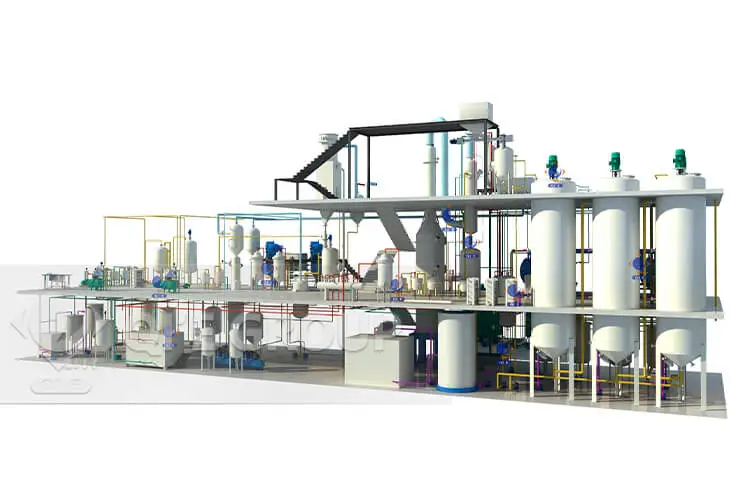
- Full lifecycle service: 3D master plan, FAT/SAT, operation and maintenance training, spare parts and remote diagnostics, ensuring long-term stable operation of the production line.
Whether you are setting up for the first time or upgrading and expanding production, QIE GROUP can provide a stable and reliable delivery experience in terms of solution depth, schedule control and cost transparency.
10. The Balance Between Technology and Flavor: Product Development Recommendations
Peanut oil has a recognizable nutty aroma, but market preferences for "aroma" vary significantly. To ensure that processing parameters and flavor fall within the optimal range, the following is recommended:
- The steaming and frying curves (temperature/time/moisture content) were determined through small-scale tests, and a three-dimensional balance of flavor, color, and oil yield was constructed.
- The refining process optimizes the amount of bleaching clay and the contact time to achieve the best balance between color and oxidative stability.
- Establish weekly reports on sample retention and stability testing (PV/AV/sensory) and continuously iterate.
Product-centric process iteration can increase market premium without significantly increasing OPEX, which is especially crucial for brands starting peanut oil production lines.
Obtain customized process packages and investment estimates
Tell us your raw materials, target capacity, and market positioning, and QIE GROUP will provide solution design, energy consumption estimation, and delivery cycle within 2–4 weeks to help you quickly start your peanut oil production line and control risks.
Obtain a turnkey solution and quotation evaluation for a peanut oil production line.After submission, we will arrange for the process engineer and project manager to liaise with you and provide a preliminary process and budget framework.