Configuring a peanut oil production line is not only about selecting machines. It requires a clear match between capacity target, process route, finished oil positioning, and investment budget. For buyers, plant owners, and technical teams, the right configuration method should balance oil yield, flavor profile, operating cost, product standard, and future expansion needs.
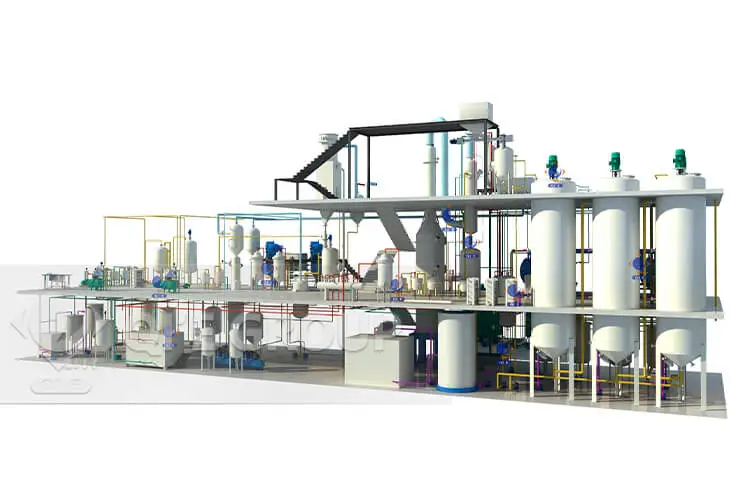
QIE GROUP develops and manufactures grain and oil processing equipment and provides practical configuration support for peanut oil production process solutions. Based on project requirements, the line can be designed for a small-capacity flavor-focused pressing plant or a large-capacity pre-pressing and solvent extraction project with refining.
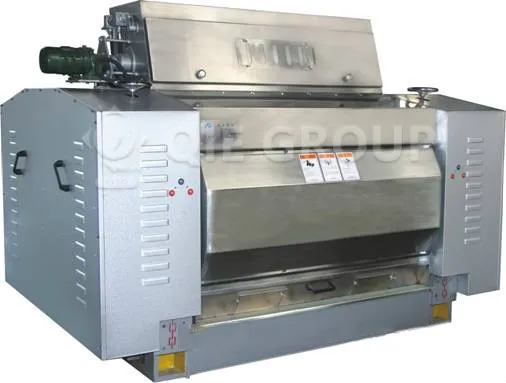
Typical equipment involved: shelling-related front-end handling where required, cleaning sieve, destoner, magnetic separator, crusher, cooking kettle, screw oil press, hydraulic oil press, pre-press machine, extractor, DTDC desolventizer, evaporator, condenser recovery system, degumming centrifuge, decolorizing tower, deodorization tower, and filtration units.
Peanut contains a high oil content, typically around 45%–55%. Because of this, two practical process routes are commonly considered:
Suitable for premium aromatic peanut oil with strong roasted nut notes.
Typical route: Raw peanuts → Cleaning → Crushing → High-temperature cooking (about 150°C) → Screw press / small oil press → Cooling filtration / crude filtration → Mild degumming or cold filtration → Filling and packing
Suitable for larger throughput, higher overall oil recovery, and standardized refined peanut oil.
Typical route: Raw peanuts → Cleaning → Crushing → Cooking (about 120°C, adjustable) → Pre-pressing → Extraction → Miscella desolventizing → Crude oil → Refining → Finished oil packing
The first route prioritizes flavor differentiation. The second route prioritizes oil yield and economic efficiency.
The pre-treatment section directly affects pressing stability, extraction efficiency, and final oil quality. Its purpose is to remove impurities, adjust material condition, and prepare peanut kernels for controlled oil release.
Procurement note: if your target is aromatic peanut oil, temperature control in the cooking stage is a key selection factor. If your target is downstream extraction performance, consistency of crushing and moisture-temperature conditioning becomes more important than aggressive roasting.
The pressing section should be selected according to whether the line is designed for direct flavor oil production or for pre-press cake preparation before extraction.
| Pressing Mode | Recommended Equipment | Typical Purpose | Reference Performance |
|---|---|---|---|
| Flavor pressing | Special screw oil press or hydraulic oil press | Produce aromatic crude peanut oil directly | Oil yield about 35%–40%; cake residual oil about 6%–8% |
| Pre-pressing | Large screw pre-press machine | Prepare press cake for solvent extraction | Oil yield about 30%–35%; cake residual oil about 16%–20% |
Key equipment selection points include:

When high overall oil recovery is the main objective, extraction becomes the decisive section. It is generally used after pre-pressing rather than as a standalone solution for this application.
Typical equipment options: rotary extractor, drag chain extractor, loop-type extractor, DTDC desolventizer, full negative-pressure evaporation system, and condensation plus tail-gas recovery system.
Reference indicators for engineering evaluation:
For procurement teams, extraction equipment should not be compared by purchase price alone. The more important factors are:
Refining requirements depend strongly on the intended finished oil category. A flavor-focused aromatic peanut oil line usually uses only cold filtration or limited degumming, while a standard edible oil project typically requires full refining.
| Refining Step | Aromatic Peanut Oil | Grade 1 Refined Peanut Oil |
|---|---|---|
| Degumming | Cold filtration or mild removal of gums | Hydration or acid degumming with centrifugation |
| Deacidification | Usually omitted if flavor retention is required | Alkali neutralization or physical deacidification |
| Decolorization | Usually omitted or only light treatment | Activated clay adsorption decolorization |
| Deodorization | Not recommended because it removes aroma compounds | Essential vacuum deodorization step |
Common refining equipment includes degumming centrifuge, vacuum deacidification tower, bleaching tower, high-efficiency filter, and vacuum deodorization tower. Continuous refining is typically used for larger capacities, while batch refining may be considered for projects up to around 30 TPD.

Capacity planning should be aligned with sales channel, market positioning, and raw material supply stability. A line that is oversized will increase fixed investment and idle capacity risk. A line that is undersized can restrict output and future market growth.
| Decision Factor | Lower-Budget / Smaller Project | Higher-Capacity / Larger Project |
|---|---|---|
| Process route | Pressing-focused line | Pre-pressing + extraction + refining |
| Core investment items | Cleaning, crushing, cooking, oil press, filtration | Pre-treatment, pre-press, extractor, DTDC, refining, recovery system |
| Product focus | Premium flavor oil | Standardized edible oil and industrial supply |
| Oil recovery objective | Moderate, with emphasis on aroma | Maximum total oil recovery |
| Operational complexity | Lower | Higher, especially in extraction and refining |
| Comparison Item | Flavor Pressing Process | Pre-Pressing + Extraction Process |
|---|---|---|
| Product positioning | Premium aromatic oil with darker color and stronger nutty profile | Standard Grade 1 peanut oil with cleaner appearance |
| Core value | Natural aroma and product differentiation | High total oil recovery and better production economics |
| Investment profile | Lower equipment investment, but lower oil yield | Higher equipment investment, but lower unit processing cost at scale |
| Technical focus | Roasting control and aroma preservation | Pre-press cake control, extraction efficiency, and refining loss control |
| Suitable market | Retail premium oil, specialty food, gift market | Mass market, food service, and food industry use |
If you are comparing peanut oil production line configurations by capacity, process route, and budget, QIE GROUP can help you review equipment matching, process logic, and project priorities based on your target oil type and plant scale.
It depends on your product goal. A pressing line is better for aromatic peanut oil with stronger flavor, while a pre-pressing plus solvent extraction line is more suitable for higher throughput and maximum oil recovery with refined finished oil.
Core equipment usually includes a cleaning sieve, destoner, magnetic separator, crusher, cooking kettle, and screw oil press. For larger projects, the line may also include a pre-press machine, extractor, DTDC desolventizer, evaporation and solvent recovery system, and refining equipment.
Budget should guide process depth, automation level, and expansion planning. A smaller budget often fits a simpler pressing-based line, while a larger investment can support pre-treatment, extraction, refining, and better energy recovery for long-term operating efficiency.
Not always. Solvent extraction is mainly used in larger-capacity projects where overall oil yield and production economics are critical. For premium flavor oil, many producers prefer a direct pressing route instead.
Buyers should compare process suitability, equipment combination, temperature and pressure control, expected oil recovery logic, energy use, solvent recovery design where relevant, refining scope, installation support, and after-sales service. The best supplier is the one that matches the line to your actual market and operating conditions.