.png?x-oss-process=image/resize,h_3000,m_lfit/format,webp)
A complete technical and commercial roadmap for establishing a high-yield peanut oil plant. Explore the latest peanut oil production line machines and prices tailored for global export standards.
In the global edible oil industry, peanut oil is prized for its high smoke point and distinct aroma. For investors, the critical challenge is choosing the right peanut oil production line machines and prices that balance initial Capex with long-term operational efficiency. Whether you're building a 10 TPD boutique mill or a 100 TPD industrial facility, our turnkey solutions ensure your plant meets international food safety standards while maximizing oil recovery.
The secret to high yield starts before the press. Peanut shells are highly absorbent; if not removed, they act like sponges, soaking up 3%–5% of your oil. Our export-standard peanut dehulling and pressing machines utilize a multi-stage aspiration system to achieve a separation rate of ≥98%. By removing the shells, you also increase the protein content of the resulting meal, making it a high-value byproduct for the animal feed market.
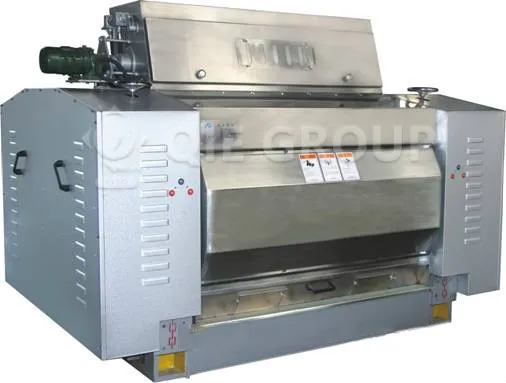
Following dehulling, we utilize precision flaking mills to reduce kernels to 0.3-0.5mm thickness. This process is non-negotiable for industrial plants, as it ruptures the cell walls and creates the massive surface area required for the subsequent extraction stage, ensuring no oil is left behind in the cellular structure.
.png)
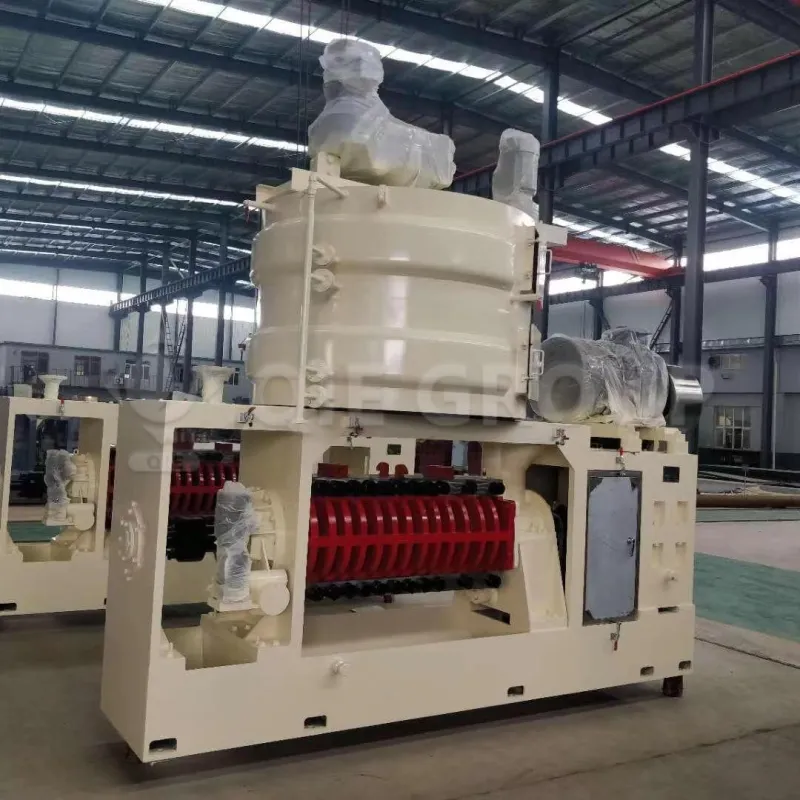
Our pressing section is designed for flexibility, supporting both cold pressing and high-temperature roasting. For aromatic peanut oil, peanuts are roasted at 120-150°C to trigger the Maillard reaction, creating that premium nutty fragrance. Our heavy-duty screw presses are optimized for low-wear operation and smooth oil discharge.
The technical highlight of our pressing line is the automatic temperature control, which prevents oil carbonization and ensures high clarity. Whether used for full pressing in small plants or as a pre-pressing stage in large 100 TPD facilities, our machines maintain a stable cake thickness, setting the stage for the solvent extraction phase.
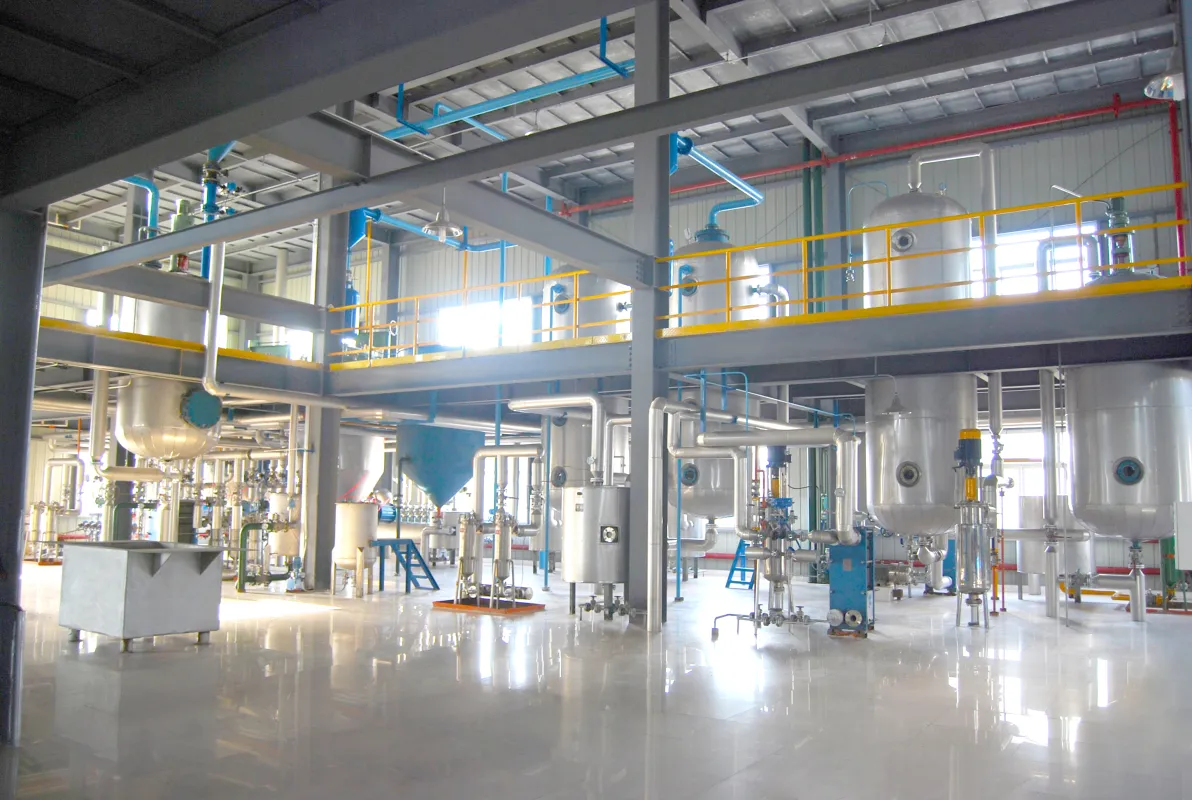
Crude peanut oil contains impurities like phospholipids, FFA, and pigments that affect shelf life and safety. Our full peanut oil production line configuration features a continuous refining system that handles degumming, deacidification, decolorization, and deodorization.
To meet global supermarket standards, our deodorization towers operate under high vacuum at 220-260°C. This not only lowers the Acid Value to ≤ 0.3 mg KOH/g but also effectively removes free fatty acids and volatile odors. For regions concerned with food safety, our refining process is engineered to significantly reduce Aflatoxin levels through precise alkali-refining and clay adsorption.
A major decision point in your 10-100 TPD peanut oil processing plant investment budget is the extraction method. For startups focusing on local "aromatic" markets (10-20 TPD), mechanical pressing is the most cost-effective entry point.
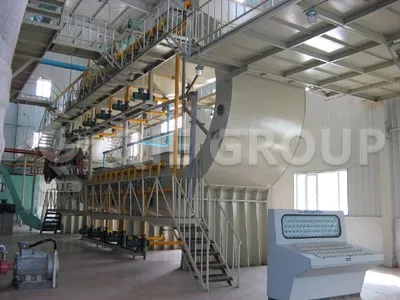
However, for any plant exceeding 30 TPD, Solvent Extraction becomes a financial necessity. While pressing leaves 6%-8% oil in the cake, our extraction system utilizes N-Hexane counter-current leaching to bring the residual oil down to ≤ 0.8%. When you process 50 tons a day, that extra 5% recovery can represent 2.5 tons of pure oil profit every single day, drastically shortening your project's payback period.
.png)
Understanding the investment budget for a 10-100 TPD peanut oil factory involves more than just the machine cost. You must look at the "Total Cost of Ownership." Our lines are designed to reduce energy consumption by 10-15% through heat recovery in the refining and evaporation stages.
| Capacity | Tech Level | Focus |
|---|---|---|
| 10-20 TPD | Mechanical Press | High Aroma / Low Capex |
| 30-50 TPD | Pre-press + Solvent | Residual Oil ≤ 1.0% |
| 80-100 TPD | Full Automation | Max Yield / High ROI |
As a global exporter, we know that standard machines often fail in tropical or remote regions. Our export-standard peanut dehulling and pressing machines feature "Tropicalized" motors with Class F insulation to handle high ambient temperatures in Africa, Southeast Asia, and the Middle East.
We also customize electrical systems for local grids (380V/415V/440V) and provide heavy-duty anti-corrosion maritime packaging. This ensures that your investment is protected from the moment it leaves our factory until it starts producing oil at your site.
Operational downtime is the biggest enemy of profit. To mitigate this, every full peanut oil production line shipment includes a "Safety Box" of essential spare parts—including pressing screws, rings, bearings, and seals—sufficient for one year of operation. Our engineers provide both remote video support and on-site commissioning to train your local team, ensuring they can maintain the line's peak performance independently.
Q: How do you control solvent loss in the extraction stage?
A: Solvent (N-Hexane) is recycled at a rate of ≥99.5%. By using full negative pressure evaporation and specialized tail gas recovery, we keep solvent consumption ≤ 1.5kg per ton of peanuts, drastically reducing your OPEX.
Q: Can the peanut meal be exported?
A: Yes. Because our dehulling machines remove the shells, the resulting meal has a higher protein concentration and lower fiber, making it a premium export product for the international feed industry.
Q: What is the typical lead time for a 50 TPD plant?
A: From design and manufacturing to shipping, the typical lead time is 60-90 days. We provide custom 3D factory layouts early in the process to help you synchronize your local civil engineering works.
Get a detailed peanut oil processing plant investment budget and free factory layout design.
Request a Custom Quote