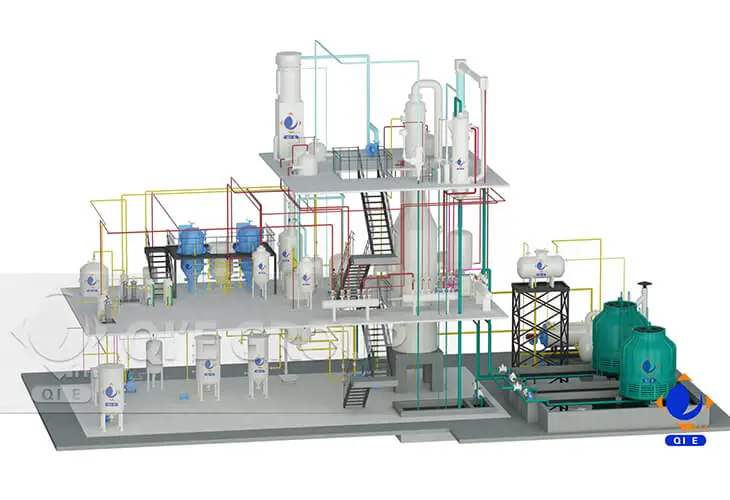
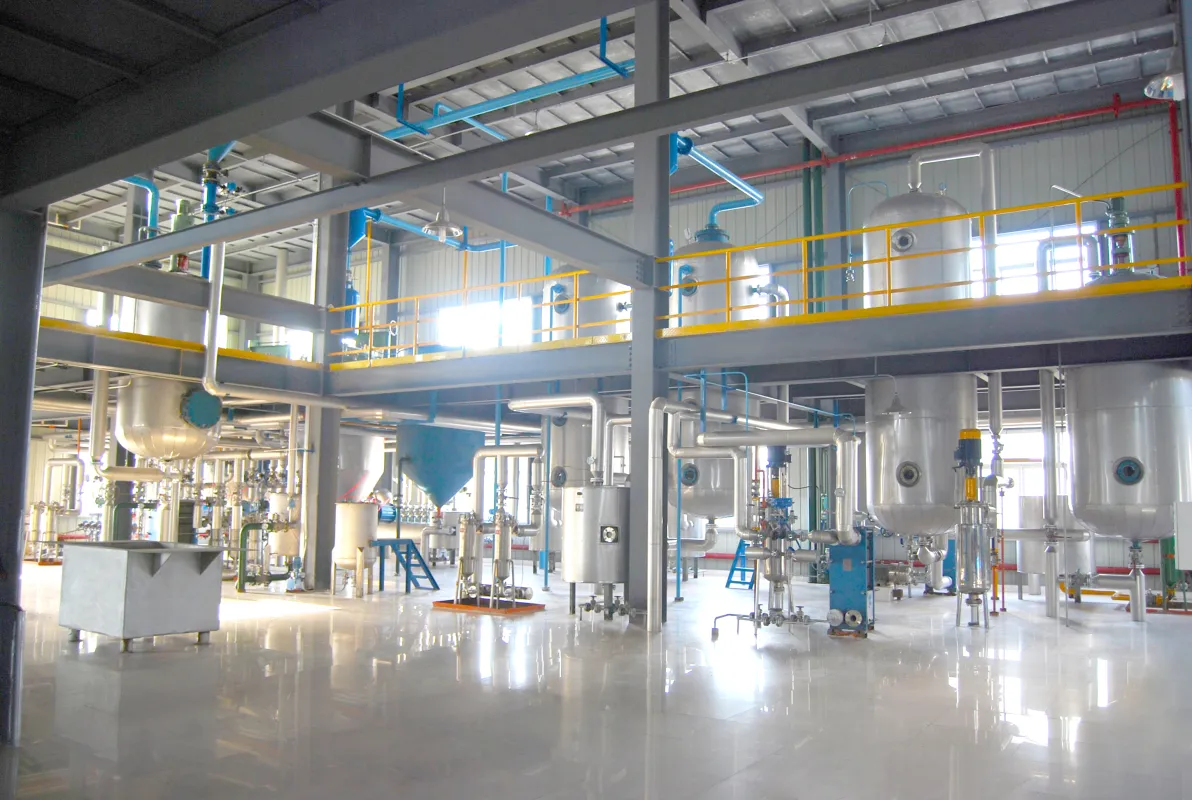
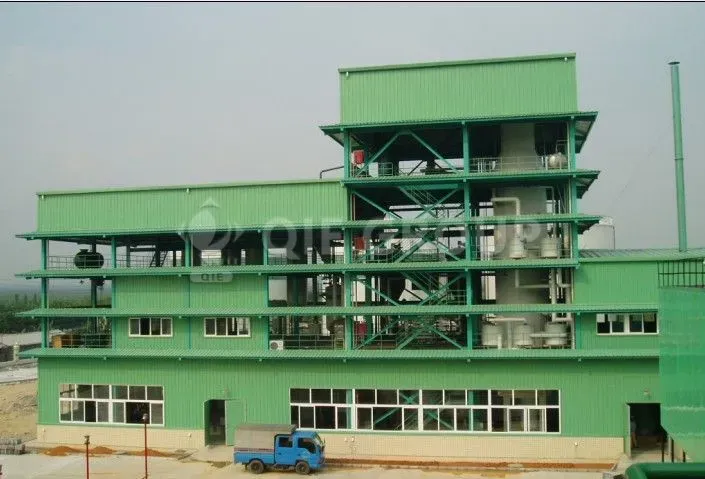
For the Sudanese market, if you plan to build or upgrade a peanut oil plant, and you're looking to determine which peanut oil production machines are "essential" and which are "optimal" for different production capacities and processes, QIE Group helps Sudanese clients quickly identify their investment path by outlining the core processes, necessary equipment lists, and selection criteria for peanut oil production, while also considering local power, raw material, and compliance requirements.
Peanut oil production generally consists of three main parts: pretreatment and pressing (or pre-pressing), solvent extraction (commonly used in large and medium-sized factories), and refining and bottling. The "essential machines" differ depending on the size of the factory, but the process logic remains the same: first, the peanuts are shelled, cleaned, and conditioned; then they are pressed or extracted; next, refining removes impurities, pigments, and off-flavors; and finally, the finished oil is bottled. In Sudan (such as Gedarif, Sennar, and North Kordofan), peanuts have a high oil yield (kernel oil content is generally 45%–52%), and proper pretreatment is fundamental to achieving this high yield.
The following are suggestions based on QIE Group's experience in projects in Sudan (data are industry experience values, for project initiation reference):
| Capacity Level (Raw Material Processing/Day) | Essential machine (core) | Recommended additional configuration | Typical Energy Consumption/Key Points |
|---|---|---|---|
| Small production line (approximately 5–20 tons/day) | Peanut shelling machine, vibrating screen/destoner, air classifier, spiral oil press, steaming/roasting/conditioning pan, primary filter (plate and frame or small oil filter). | Small-scale intermittent refining (degumming/deacidification/decolorization/deodorization), semi-automatic filling machine, air compressor and small boiler | Electricity consumption is approximately 20–35 kWh/ton of seeds; steam is configured according to conditioning requirements; 2–5 workers per shift. |
| Medium-sized production line (approximately 30–150 tons/day) | Complete pretreatment system (cleaning, destoning, magnetic separation, shelling, crushing, softening/steaming, flake processing), pre-pressing screw press, plate and frame filter press. | Continuous or semi-continuous refining, automatic filling lines, boilers (steam), heat exchange systems, deodorization vacuum systems | Power consumption is approximately 25–40 kWh/ton of seeds; steam consumption is 200–400 kg/ton (including refining); the equipment has a compact footprint and a more optimized layout. |
| Large-scale production line (≥200 tons/day) | Pre-pressing + solvent extraction complete system: pre-pressing mill, solvent extractor (ring/rotary/Rotocel), DTDC (desolventizing-drying-cooling), rice bran/meal drying and cooling system, solvent recovery system, continuous refining (physical/chemical), dewaxing/wintering. | DCS/PLC central control, heat energy recovery, heat exchange network optimization, online vacuum system for deodorization tower, wastewater and exhaust gas treatment, refined oil storage tank area | Solvent loss is approximately 0.6–1.2 kg/ton of seed; steam loss is 300–600 kg/ton (including leaching and refining); oil residue/wax control is more stringent. |
1) Cleaning and Pre-treatment (Required) : Vibrating screen, destoner, magnetic separator, air classifier for dust removal, sheller (peanut kernels must be removed from the pods). Sudanese production areas have a lot of dust, so the cleaning stage is essential; for better quality, it is recommended to add a color sorter to reduce moldy kernels and lower the risk of aflatoxin.
2) Crushing/Steaming/Softening (Simplified for small-scale processes, but conditioning equipment is still recommended) : Steaming or frying pans or conditioning pots use heating and moderate humidification to break down cell walls, reduce viscosity, and improve oil yield and flavor stability. The target moisture content is usually controlled in the range of 6%–8%.
3) Pressing (essential) : The screw oil press is the "heart" of small and medium-sized peanut oil production machines. The residual oil in a single press cake is generally about 6%–8%, which can be further reduced to about 1% or less by combining pre-pressing and leaching.
4) Filtration (mandatory) : Primary filtration (oil filter/plate and frame filter) removes oil residue and protects downstream equipment. For medium-sized production lines, plate and frame filters or bag filters are recommended to improve clarity.
5) Leaching (strongly recommended for medium and large scale) : When you need lower residual oil and lower unit cost, the solvent leaching unit combined with DTDC is a key piece of equipment.
6) Refining (mandatory, at least basic refining) : Degumming, deacidification, decolorization, and deodorization form the core of refining. Depending on market positioning, dewaxing/wintering (to improve low-temperature clarity) can be added. The vacuum system and heat exchange design determine the flavor and energy consumption of the finished oil.
7) Filling and storage (mandatory) : Semi-automatic or fully automatic filling machines, coding machines, capping machines, labeling machines and finished oil tanks, plus nitrogen sealing and breather valves to ensure oil quality.
Total investment is primarily determined by capacity, level of automation, and refining depth. Generally, small-scale lines have relatively low financial pressure, medium-sized lines need to balance brand quality and efficiency, and large-scale lines focus more on cost per ton of oil and sustainable operation. On the operating cost side, steam and electricity account for a high proportion, and leaching lines also involve solvent loss and safety management; it is recommended to allocate a budget for energy efficiency optimization (such as heat recovery and frequency converter retrofitting) during the selection phase, which can often offset the initial investment within a 6-18 month operating cycle.
For Sudanese customers, the common approach is to first implement a combination of "pretreatment + pressing + basic refining + semi-automatic filling", and then upgrade to continuous refining or add an extraction stage after profitability is achieved.
As a manufacturer specializing in peanut oil production machinery with deep expertise in oleochemical engineering, QIE Group offers integrated services ranging from process packages, equipment design and manufacturing, installation and commissioning to employee training and remote operation and maintenance. Our peanut oil production equipment covers a full range from 5 to 800 tons/day, supports English/Arabic/Chinese interfaces, and is customized to meet the specific operating conditions of Sudanese clients (dustproof, heat-resistant, modular transport). Furthermore, we utilize efficient heat exchange and vacuum systems in the pretreatment, leaching, and refining stages to help you enhance your competitiveness in both local and export markets.
Yes, but it requires stable low temperature and low moisture conditions, and the oil yield is usually lower than that of hot pressing. Sudan is mostly a tropical hot and dry environment, and small and medium-sized factories generally use warm pressing/hot pressing + rapid cooling.
Basic refining (including several steps such as degumming, deacidification, decolorization, and deodorization) is necessary; otherwise, the acid value and stability of the finished oil may not meet the standards.
Stable steam pressure is required for processes such as conditioning and deodorization. QIE Group can select the appropriate steam volume based on different production capacities and processes, and can match boilers and condensate recovery systems according to on-site fuel conditions (such as diesel/heavy oil).
Delivery time is typically 45–60 days for small production lines and 90–120 days for medium to large production lines. The QIE Group provides on-site installation and commissioning services, as well as spare parts and remote technical support in Khartoum and other major production areas.
Tell us your raw materials, production capacity, and target market, and QIE Group will provide you with an "essential machinery + one-step expansion" solution, supporting EXW/FOB/CIF delivery and on-site installation and commissioning. Get your customized configuration and overall energy consumption calculation now.
Get a one-on-one customized solution for peanut oil production from QIE GroupIf you are planning a new plant or upgrading an existing line in Sudan, please send us your raw material samples, target capacity, and existing site parameters. Our engineers will provide practical suggestions based on the actual operating conditions.