For investors planning a peanut oil processing plant, a common question is: when processing the same peanut raw material, why is the investment for peanut oil pre-press equipment or a pre-press extraction solution usually higher than that of a conventional pressing line? The main reason is not simply that one machine is more expensive; rather, the process scope, supporting systems, automation control, safety and environmental requirements, and downstream oil treatment stages of the entire production line all change.
Based on QIE GROUP’s engineering practice in peanut oil production lines, this article helps B2B buyers compare the cost differences between peanut oil pre-press extraction and pressing lines from the perspectives of equipment configuration and procurement decisions.
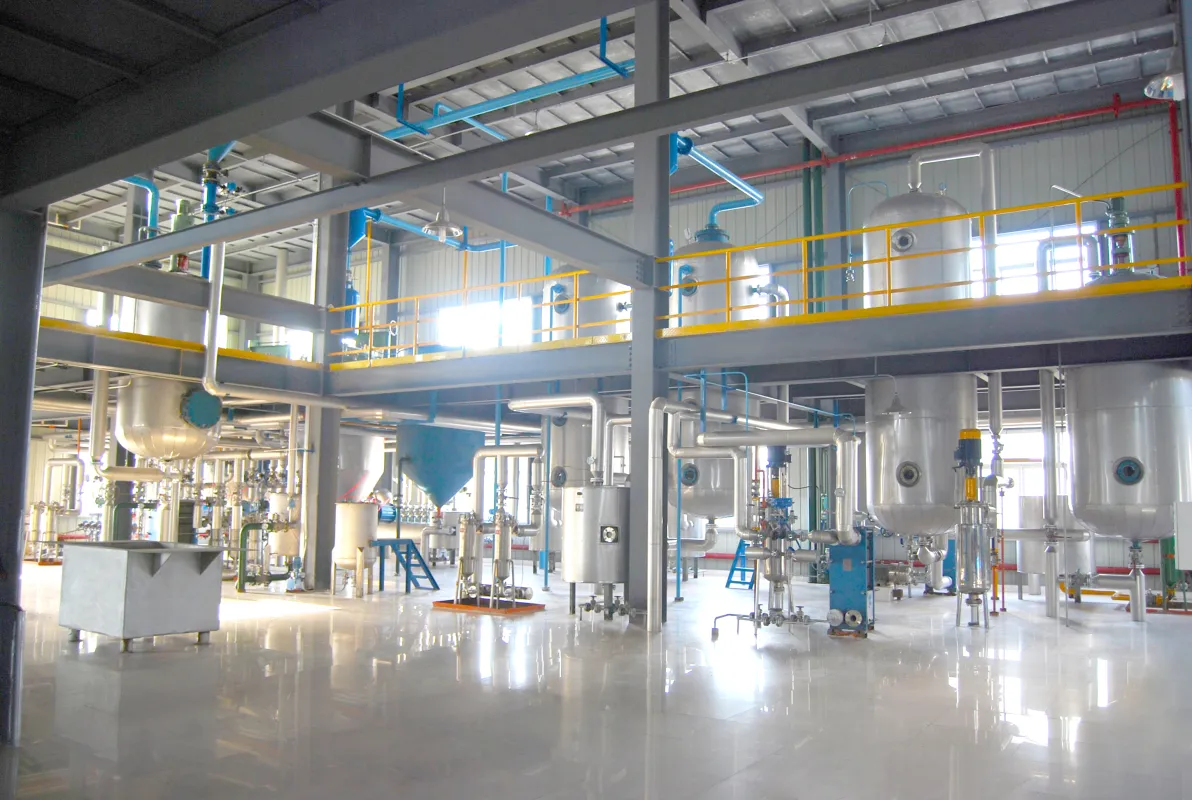
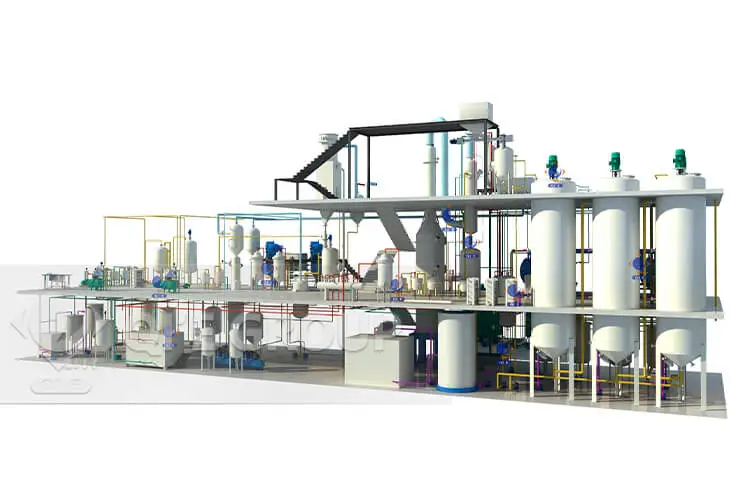
A peanut oil processing plant usually includes peanut oil pretreatment machinery and peanut oil press machines. A conventional pressing line mainly covers cleaning, crushing, cooking, pressing, and filtration, and is suitable for production centered on mechanical pressing. A pre-press extraction line, however, adds extraction, desolventizing, evaporation, solvent recovery, environmental and safety systems, and necessary refining-related systems after pretreatment and pre-pressing, making it a more complete oil extraction project.
The higher cost of peanut oil pre-press equipment usually comes from two aspects: increased equipment quantity and greater engineering system complexity. The table below can be used as a reference for preliminary investment evaluation.
| Cost Component | Conventional Pressing Line | Pre-Press Extraction Line | What to Focus on in Procurement |
|---|---|---|---|
| Pretreatment equipment | Basic configuration for cleaning, magnetic separation, destoning, crushing, and cooking | Usually requires more stable control of particle size, moisture, and temperature to create conditions for downstream extraction | Raw material impurity level, moisture content, processing capacity, and continuous operating stability |
| Pressing system | Centered on screw oil presses and filters | Adds a pre-pressing section and connects the material state to the extraction stage | Whether pre-pressing, secondary pressing, or downstream extraction is required |
| Extraction and desolventizing | Generally not included | Involves extractor, DTDC desolventizer, miscella evaporation, and related systems | Process safety, solvent management, plant conditions, and operating procedures |
| Solvent recovery and environmental safety | Relatively simple system | Requires solvent recovery, condensation, off-gas treatment, and safety interlocks | Local environmental regulations, fire protection requirements, installation space, and staff training |
| Downstream refining | Can be configured according to finished oil standards | May further involve degumming, deacidification, decolorization, and deodorization sections | Target market, oil quality standards, and packaging/sales method |
A properly configured peanut oil production line is not just a simple combination of single oil presses, but a continuous system formed by multiple machines arranged in process order. The following equipment names can help customers describe their needs more accurately during inquiries and technical communication.
Used for shell removal. The structure usually includes a feeding system, drum, concave plate, air separation, and sorting sections. When purchasing, focus on shelling efficiency, breakage rate, throughput, and maintenance convenience.
The cleaning screen removes large and small impurities, while the magnetic separator removes ferrous contaminants. They directly contribute to protecting downstream equipment, ensuring stable operation, and improving the basic quality of the oil.
Used to remove heavy impurities such as stones and mud clods. For projects with more complex raw material sources, the destoning stage affects equipment wear, production safety, and downstream pressing stability.
Crushes peanuts to a state suitable for softening, cooking, and pressing. The more stable the particle size, the easier it is to control moisture and temperature in subsequent stages.
Used to adjust the moisture and temperature of peanut materials so they reach a process state more suitable for pressing. Cooking performance affects pressing results and downstream handling.
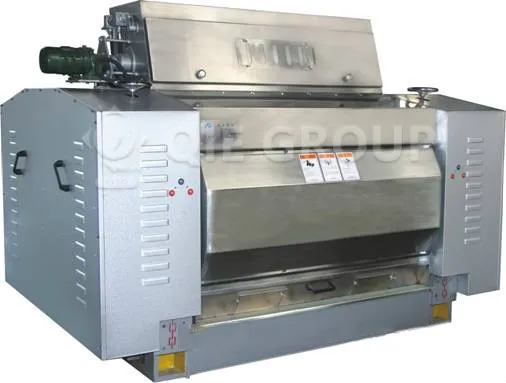
Converts the material into thin flakes to increase the contact area. In pre-press extraction solutions, flake quality is closely related to extraction efficiency and process stability.
The screw pre-press is suitable for the first pressing of high-oil materials; the screw oil press can be used for peanuts, rapeseed, soybeans, sunflower seeds, and other oilseeds. The exact configuration should be confirmed according to the process route.
Used to remove coarse and fine residues from oil, making it suitable for subsequent fine filtration or refining. When purchasing, focus on filtration area, discharge method, material, and continuous operation capability.
Investment in a peanut oil processing plant is better evaluated comprehensively based on “process route + capacity + finished oil requirements + plant conditions + utilities.” The reason a pre-press extraction line costs more is that, in addition to the front-end peanut oil pretreatment machinery and pressing equipment, it also involves extraction, desolventizing, evaporation, solvent recovery, environmental safety, control systems, installation and commissioning, and operator training.
If your project aims for small- to medium-scale pressing, simpler production organization, and lower initial investment, a conventional pressing line may be easier to launch. If your project is oriented toward larger continuous production, aims to establish a more complete oil extraction system, and has the required plant, utilities, and safety/environmental conditions, you can further evaluate a pre-press extraction solution.
| Procurement Question | Recommended Information to Provide | Why It Matters |
|---|---|---|
| How much peanut raw material do you plan to process? | Hourly or daily capacity, working shifts | Determines equipment size, conveying method, and supporting power |
| Is the raw material shelled? What is the impurity condition? | Peanut kernels or unshelled peanuts, moisture content, impurity types | Affects shelling, cleaning, magnetic separation, and destoning equipment configuration |
| What is the finished oil target? | Crude oil, filtered oil, refined oil, or packaged oil | Determines whether filtration, deacidification/drying, refining, and bottling sections are needed |
| Are you considering pre-press extraction? | Budget range, plant conditions, environmental and safety requirements | Determines whether extraction, DTDC desolventizing, solvent recovery, and other systems are added |
Please provide the raw material type, planned capacity, target oil product, plant conditions, and budget direction. QIE Grain and Oil Machinery can help you make an initial judgment on whether a pressing line or a pre-press extraction line is the right configuration for your project.
Usually yes, especially when the solution includes extraction, DTDC desolventizing, miscella evaporation, solvent recovery, environmental and safety systems, and refining-related systems. The actual investment still needs to be calculated based on capacity, process route, and local installation conditions.
Not necessarily. For small projects focused on lower startup cost, simple operation, and mechanical pressing, a conventional pressing line may be the preferred option. A pre-press extraction solution is more suitable for projects with continuous production needs, supporting conditions, and safety/environmental management capability.
Common equipment includes a peanut shelling machine, cleaning screen, magnetic separator, specific gravity destoner, toothed roller crusher, flaking mill, cooking pan, screw pre-press, screw oil press, and vertical leaf filter. A pre-press extraction solution also adds extraction, desolventizing, evaporation, and solvent recovery systems.
It is recommended to provide raw material condition, planned processing capacity, working hours, target finished oil, whether refining is required, plant dimensions, electricity and steam conditions, and local environmental and fire protection requirements. The more complete the information, the closer the equipment configuration and quotation will be to the actual project needs.
QIE GROUP can provide R&D, design, manufacturing, installation, commissioning, and after-sales service support for grain and oil processing projects. For peanut oil production lines, the team can help with equipment configuration communication and solution evaluation based on the customer’s capacity, process route, and procurement objectives.