Sudan is one of the important peanut-producing regions. Peanut oil processing projects in the local market usually involve three types of investors: small branded oil mills, agricultural cooperatives, and large edible oil processing enterprises. These customers have different goals: some focus on rich aroma and brand premium, some prioritize centralized raw material processing, while others need higher oil yield, continuous production, and downstream refining capacity.
Equipment selection for peanut oil processing should not be based only on the price of a single oil press. For Sudanese customers, a more practical evaluation method is to assess raw material scale, target oil product, budget, plant conditions, technical capability, automation level, and future expansion plans in one framework.
Suitable for customers seeking aromatic pressed peanut oil, lower to medium investment, flexible production, and local retail brand development. Core equipment usually includes cleaning equipment, roasting equipment, a small screw oil press or hydraulic oil press, and filtration equipment.
Suitable for centralized processing of scattered peanut raw materials while balancing member income and regional processing capacity. They can choose a medium or small pressed oil line, or reserve interfaces for pre-pressing or refining.
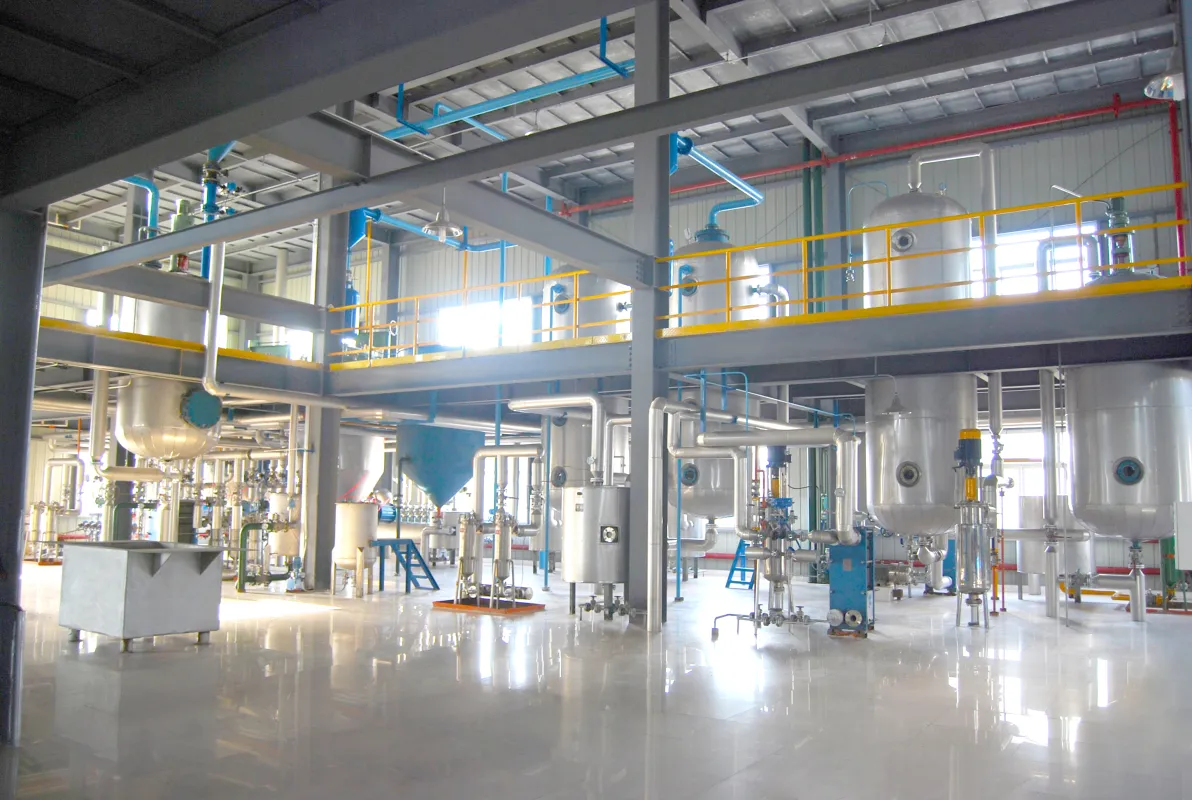
Suitable for evaluating a complete pre-pressing, solvent extraction, and refining line, with emphasis on continuous operation, residual oil control, solvent recovery, energy consumption, safety and environmental protection, and finished oil stability.
| Customer Type | Main Goal | Recommended Process Route | Core Equipment | Key Purchasing Concerns |
|---|---|---|---|---|
| Small Branded Oil Mill | Produce aromatic peanut oil and highlight flavor and local brand value | Cleaning → crushing → high-temperature roasting → screw/small press pressing → cold filtration or coarse filtration → mild treatment | High-efficiency cleaning screen, destoner, magnetic separator, roasting cooker, small screw oil press, hydraulic oil press, filtration equipment | Flavor control, investment level, ease of operation, after-sales support, spare parts supply |
| Agricultural Cooperative | Centralized processing of members’ peanut raw materials and increased raw material value | Medium or small pressing line, or reserved interfaces for pre-pressing, filtration, and refining | Cleaning screen, crusher, roasting cooker, screw oil press, oil cold filtration/coarse filtration equipment, oil storage facilities | Seasonal raw material supply, daily processing capacity, equipment durability, training and maintenance, future expansion space |
| Large Edible Oil Process Plant | Large-scale production with higher overall oil yield and economic returns | Pre-treatment → pre-pressing → extraction → crude oil treatment → refining → finished oil packaging | Large screw pre-press, annular extractor, drag chain extractor, loop extractor, DTDC desolventizer toaster, degumming centrifuge, decolorization tower, deodorization tower | Residual oil rate, solvent recovery, safety and environmental protection, continuous operation, energy consumption, installation and commissioning capability |
Peanuts are an oilseed with a high oil content, typically 45%–55%. During project planning, customers usually choose between a “rich-flavor pressing process” and a “pre-pressing plus solvent extraction integrated process.” The equipment configuration, investment logic, and finished oil positioning of the two routes are different.
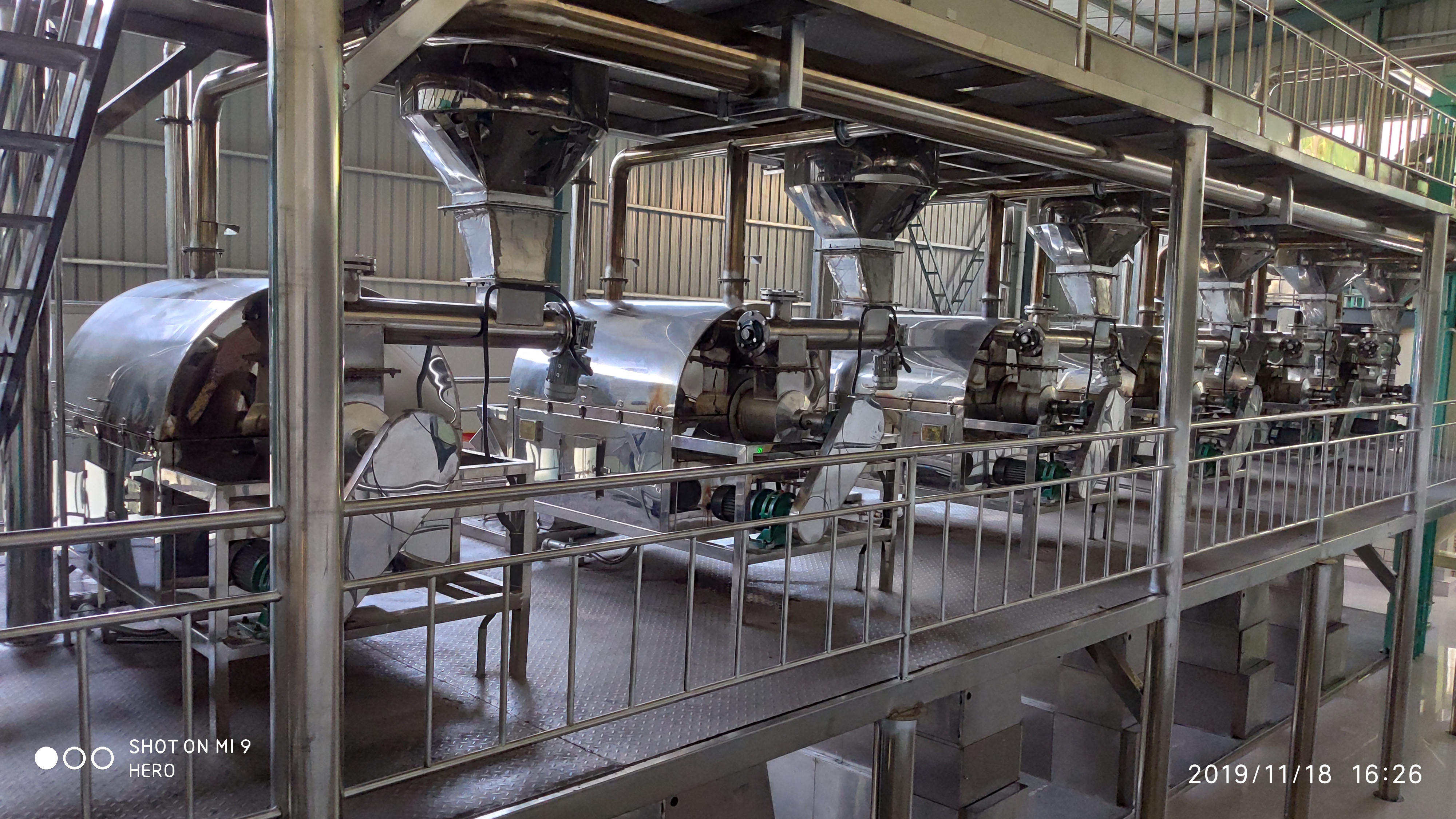
Process route: Raw material intake → cleaning → crushing → high-temperature roasting (about 150°C) → screw/small press pressing → oil cold filtration/coarse filtration → degumming or mild refining → filling/packaging.
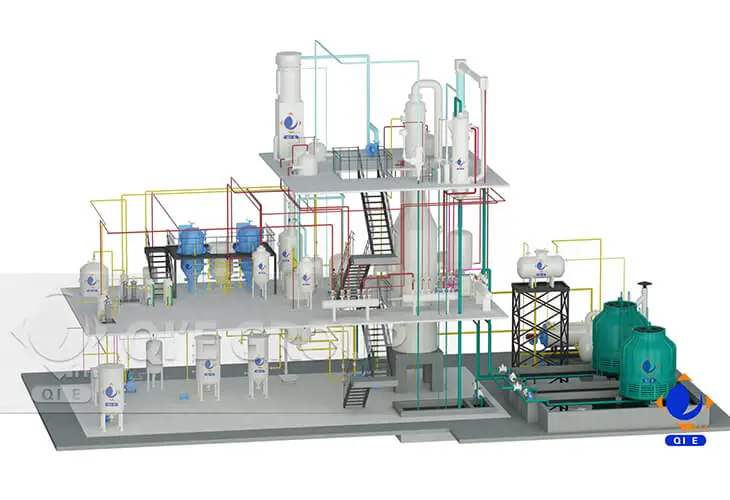
Process route: Raw material intake → cleaning → crushing → roasting (adjustable to about 120°C) → pre-pressing → extraction → mixed oil desolventizing → crude oil → refining → finished oil packaging.
Pretreatment usually includes cleaning, crushing, and roasting. By removing impurities, adjusting moisture and temperature, and improving cell structure, the stability of subsequent pressing or pre-pressing can be improved. Common equipment includes high-efficiency cleaning screens, destoners, magnetic separators, crushers, and roasting cookers. Roasting temperature can be adjusted within 90–150°C according to the requirements for rich-flavor or light-flavor oil.
The pressing section extracts oil through mechanical pressure. For rich-flavor processes, a small press, dedicated screw oil press, or hydraulic oil press can be selected, with a focus on controlling the press chamber temperature and retaining flavor compounds. Pre-pressing processes usually use large screw oil presses, aiming to produce press cake suitable for extraction.
The extraction section mainly handles pre-pressed cake and further extracts oil through countercurrent solvent extraction. Typical equipment includes annular extractors, drag chain extractors, loop extractors, DTDC desolventizer toasters, full negative pressure evaporation systems, and condensate tail gas recovery units. This section is more suitable for large projects with strong safety and environmental management capability.
The refining section removes gums, free fatty acids, pigments, and odors. The standard process includes degumming, deacidification, decolorization, and deodorization. Rich-flavor peanut oil usually avoids deep deodorization to preserve aroma, while first-grade peanut oil requires a more complete refining process to achieve clearer color, stable odor, and better storage performance.
| Comparison Dimension | Rich-Flavor Pressing Process | Pre-Pressing and Extraction Process |
|---|---|---|
| Product Positioning | Premium flavored oil with strong aroma and darker color | Standard first-grade oil or large-scale edible oil with a lighter flavor and clearer color |
| Core Value | Highlights natural aroma and differentiated flavor | Improves overall oil yield and production economics |
| Equipment Investment | Relatively small, suitable for medium and small-scale start-up projects | Higher investment, involving extraction, solvent recovery, and refining systems |
| Technical Focus | Roasting temperature, pressing temperature, filtration method, and aroma retention | Residual oil control in pre-pressed cake, extraction safety, solvent recovery, and refining loss control |
| Applicable Market | Retail markets that value flavor, regional brands, and gift markets | Mass catering, home cooking, food industry oils, and large-scale sales channels |

If the project is mainly for local sales, brand testing, or small-batch processing, a basic pressing line consisting of cleaning, roasting, pressing, and filtration can be prioritized. This solution helps control investment and is also useful for testing market acceptance.
If the raw materials come from multiple growers, focus on equipment stability, daily processing capacity, and operator training. It is recommended to reserve expansion interfaces for future refining or higher capacity upgrades.
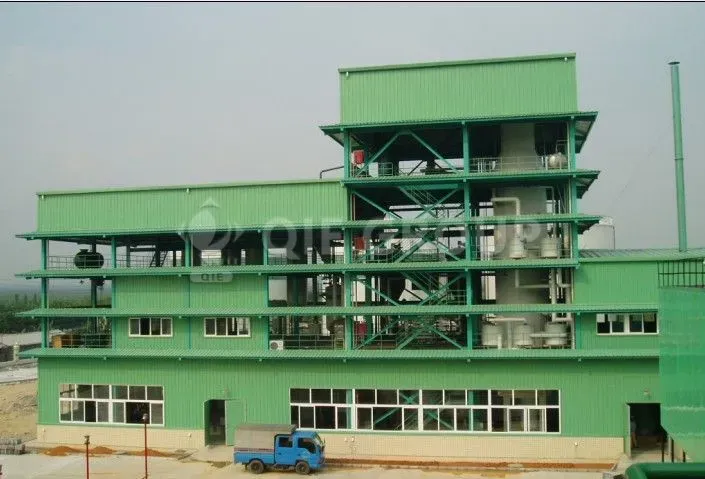
If you plan to build a large edible oil processing plant, overall planning should start from the process layout, pretreatment capacity, pre-press model, extractor type, refining capacity, and finished oil packaging integration.
Please provide your planned processing capacity, raw material details, target oil product, workshop conditions, and budget range. Zhengzhou QIE Grain and Oil Machinery Co., Ltd can help you evaluate the right combination of peanut oil production line, pretreatment equipment, pressing equipment, extraction equipment, and refining equipment based on your project positioning.
The right peanut oil production line should be planned from the project’s business goals, not from a single machine. Small oil mills focus on flavor and startup cost, agricultural cooperatives focus on centralized raw material processing and stable operation, while large enterprises need a systematic evaluation of pre-pressing, extraction, refining, and safety and environmental protection capabilities.