Home > News > Solutions for small-scale peanut oil refineries in Myanmar

Solutions for small-scale peanut oil refineries in Myanmar

2026-01-15
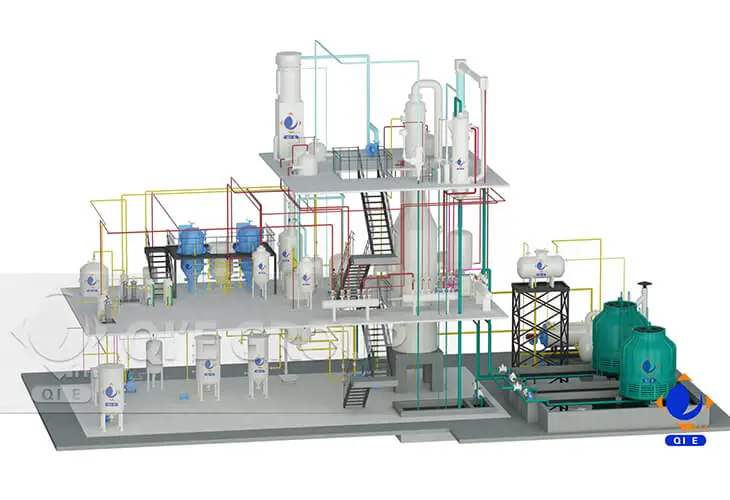
We specialize in providing comprehensive solutions for small-scale peanut oil refineries in Myanmar, covering process design, equipment configuration, installation, commissioning, and after-sales service. We offer customized solutions for small-scale peanut oil refineries in Myanmar with varying production capacities, employing continuous refining technology to improve oil quality, reduce energy consumption and operating costs, and help clients build efficient plants and achieve stable production.
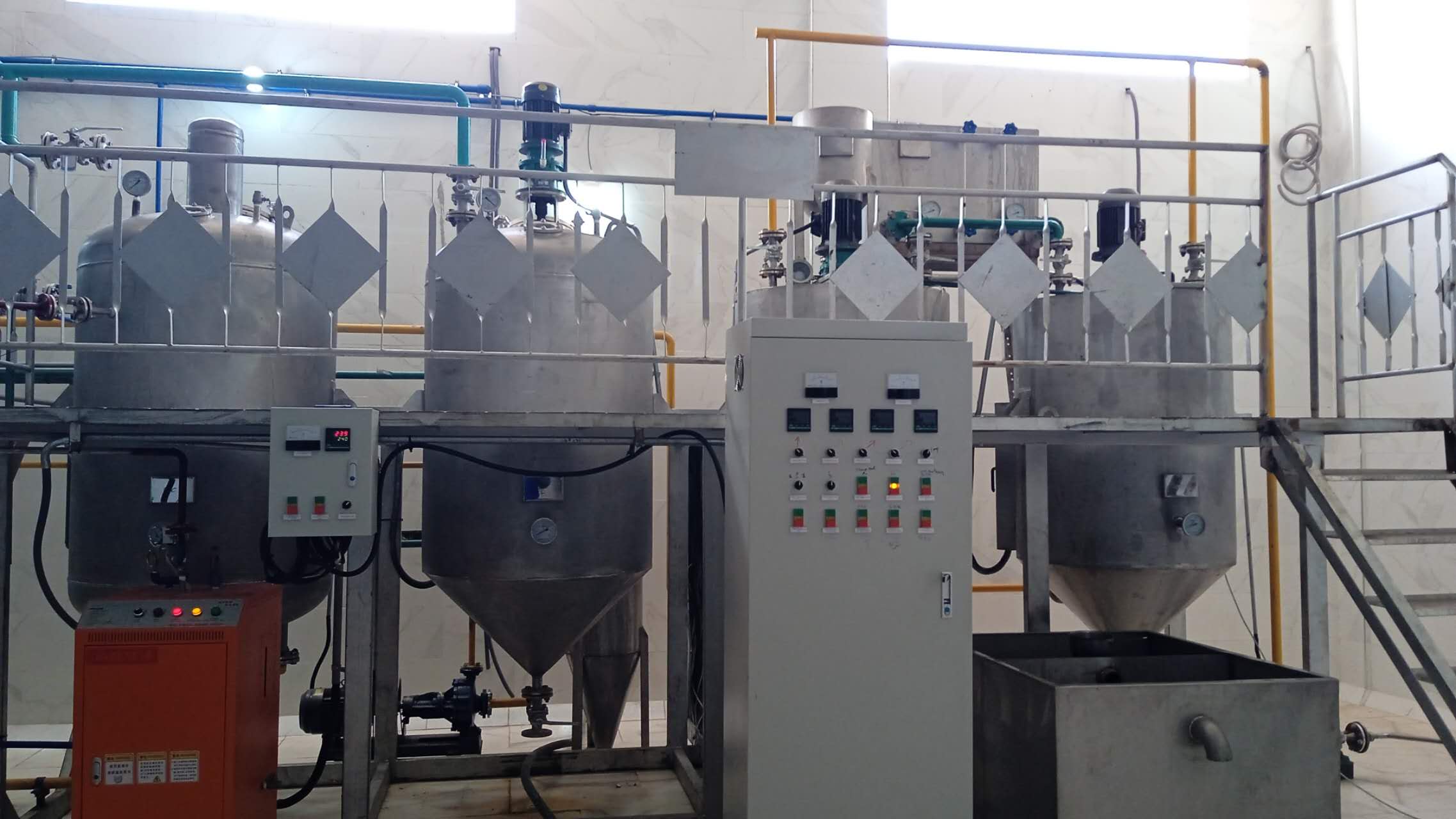
WechatIMG91.jpeg

Total Solution for Small-Scale Peanut Oil Refineries in Myanmar

In Myanmar, the peanut oil industry boasts broad development prospects and market potential. Leveraging its professional engineering capabilities and extensive project experience, QIE GROUP tailors comprehensive and efficient solutions for small-scale peanut oil refineries in Myanmar, aiming to build advanced and stable small-scale peanut oil refining lines to help these refineries increase capacity, optimize product quality, and enhance market competitiveness.

QIE GROUP provides tailored solutions for establishing small-scale peanut oil refineries in Myanmar , combining proven technology with local market adaptability to ensure high-quality products and long-term profitability.

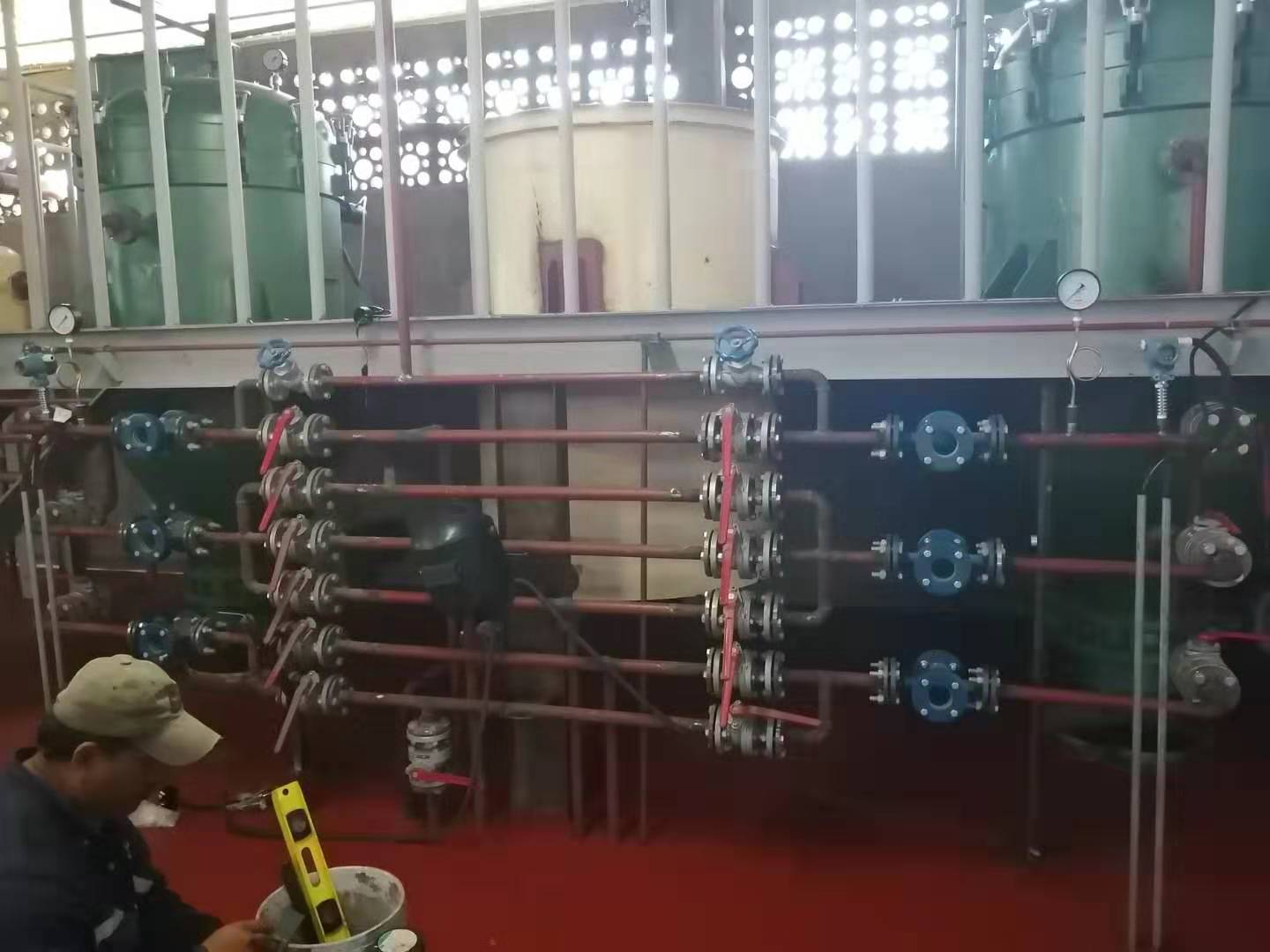
WechatIMG96.jpeg
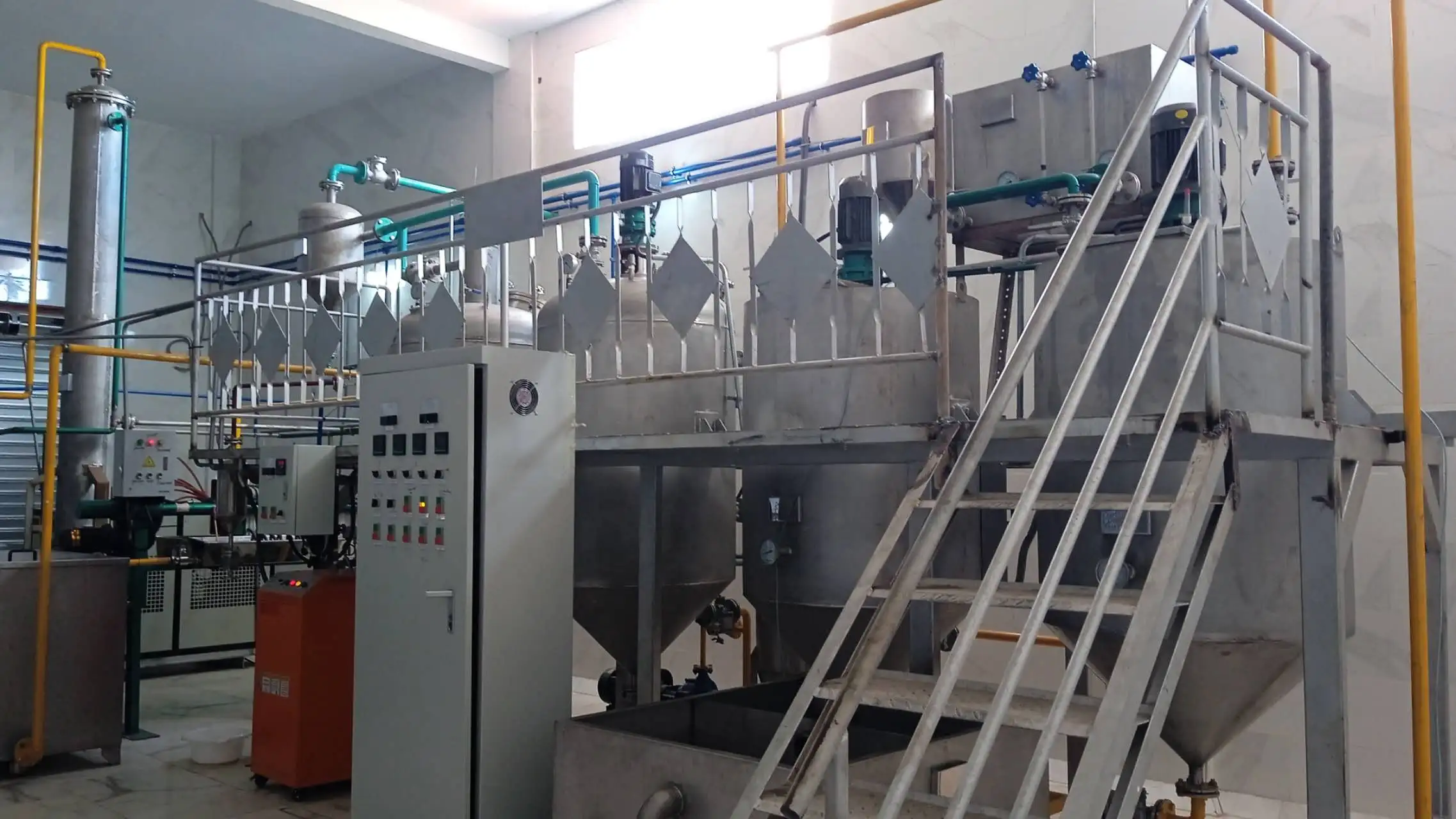
Myanmar small palm oil refining line control room

Refining process selection

QIE GROUP's small-scale peanut oil refining line in Myanmar offers a variety of flexible refining process routes to adapt to different market positioning and production goals. For premium peanut oil products seeking a rich flavor, a small-tonnage, strong-aroma pressing process can be used. The process flow is as follows: raw material intake → cleaning → crushing → high-temperature steaming (approximately 150°C) → screw press/small press → oil cold filtration/coarse filtration → degumming (cold filtration or light refining) → canning/packaging. This process utilizes the Maillard reaction to create a unique nutty aroma, focusing on producing high-value-added, strong-aroma peanut oil products.

If the goal is to produce high-quality, mass-market peanut oil that meets national standards for mass consumption on a large scale and with high efficiency, QIE GROUP's solution for small-scale peanut oil refineries in Myanmar recommends a large-tonnage, high-yield integrated process. The process is as follows: raw material intake → cleaning → crushing → roasting (approximately 120°C, adjustable) → pre-pressing (screw press) → extraction (ring/drag chain/flat rotary extractor) → solvent extraction of mixed oil → crude oil → refining (degumming → deacidification → decolorization → deodorization) → finished oil packaging. This "pre-pressing-extraction integrated process" focuses on maximizing oil yield and economic benefits while also considering oil quality and stability, making it suitable for small-scale peanut oil refineries in Myanmar .

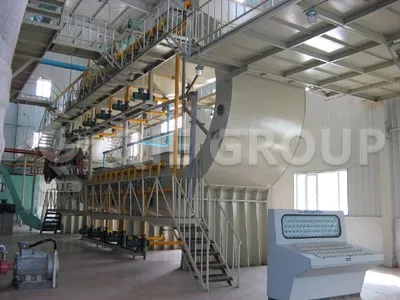
微信图片_202008261747378.jpg
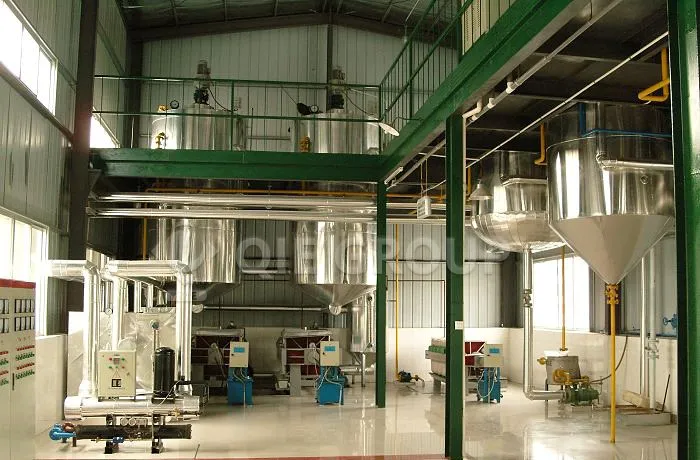
30t/d Myanmar Small-Scale Peanut Oil Refining Plant Equipment

Equipment configuration and price advantages

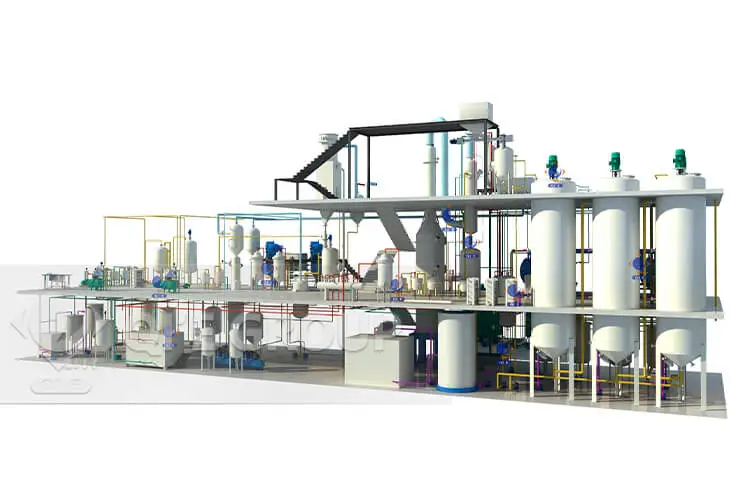
QIE GROUP has meticulously configured key process equipment for small-scale peanut oil refineries in Myanmar . The pre-processing section is equipped with high-efficiency cleaning screens, destoners, magnetic separators, and steaming/roasting pans to remove impurities, adjust moisture content and temperature, and improve cell structure, thereby promoting oil release and imparting the unique flavor to the peanut oil. The steaming/roasting temperature can be flexibly adjusted between 90–150°C to meet the market demands for both strong and light aroma peanuts; the uniform particle size facilitates subsequent pressing or pre-pressing; and a cold-pressing process is also available to better preserve the oil's flavor and nutritional value.

In the pressing section, for the intense aroma processing, the small-scale peanut oil refining line in Myanmar uses small-scale specialized oil presses (screw or hydraulic presses), which feature high pressure, low throughput, and controllable pressing chamber temperature, thus maximizing the preservation of flavor compounds. For the pre-pressing process, a large screw pre-press is used, offering advantages such as large throughput and high oil extraction efficiency. The extraction section (suitable for large-tonnage processes) is equipped with annular extractors, drag chain extractors, rotary extractors, DTDC desiccant steam extractors, a full negative pressure evaporation system, and a condensate tail gas recovery device, ensuring a residual oil rate of ≤ 0.8%, solvent consumption of ≤ 1.5 kg/t, solvent recovery rate of ≥ 99.5%, and an increase in thermal energy utilization rate of 10–15%.

Regarding equipment investment, QIE GROUP fully considers the cost budget of small-scale peanut oil refineries in Myanmar , offering competitive equipment prices and overall solution quotations. Based on different process requirements and equipment combinations, the company tailors the most economical and efficient solutions for small-scale peanut oil refineries in Myanmar , helping clients reduce initial investment costs and improve long-term return on investment.


Why choose QIE GROUP for your small peanut oil refinery?

For its aromatic peanut oil, QIE GROUP's small-scale peanut oil refining line in Myanmar uses cold filtration degumming (natural settling or low-temperature filtration) to primarily remove phospholipids and gums, avoiding the flavor degradation caused by high-temperature hydration and centrifugation. The deacidification process is usually omitted to retain some free fatty acids as flavor components, but the acid value is strictly controlled within national standards. Decolorization is generally omitted or only lightly performed to retain natural pigments and maintain a deep amber appearance. The deodorization process is strictly avoided because high-temperature deodorization will volatilize aroma components, leading to the loss of the rich aroma.

For Grade 1 peanut oil (fully refined), QIE GROUP's small-scale peanut oil refinery in Myanmar adopts a standardized industrial refining route: degumming uses hydration/acid refining and centrifugation to thoroughly remove phospholipids; deacidification uses alkali refining and neutralization or physical distillation to ensure complete removal of free fatty acids, meet acid value requirements, and improve flavor stability; decolorization uses activated clay adsorption to obtain a clear oil body; deodorization, as a core process, uses high-temperature and high-vacuum distillation to remove off-odors and peroxides, ensuring that the finished oil has a high smoke point, pure flavor, and a longer shelf life.

QIE GROUP's small-scale peanut oil refining line in Myanmar can adopt a continuous refining system (≤30TPD, intermittent type optional), operating under high vacuum and low temperature conditions to effectively reduce oil oxidation; degumming adopts a combination of hydration and centrifugation technology, with a high phospholipid removal rate; a multi-stage steam deodorization system ensures that the oil has a pure and stable odor; the overall refining energy consumption is reduced by about 10%–15%, ensuring that the finished oil meets the national first or second grade standards.

QIE GROUP has over 15 years of experience in edible oil processing equipment, focusing on providing turnkey solutions for emerging markets such as Myanmar. Our engineers have successfully implemented over 200 small-scale refinery projects in South and Southeast Asia, ensuring smooth equipment operation even in complex infrastructure conditions.

If you are interested in our small-scale peanut oil refinery solutions in Myanmar and would like to learn more about small-scale peanut oil refining lines and refineries in Myanmar, or to obtain a specific price quote, please click the inquiry button below. Our professional team will be happy to assist you.

Get your free Myanmar peanut oil refining solution now!

Frequently Asked Questions about the Refining of Burmese Peanut Oil

  1. Q: Can QIE GROUP's small-scale peanut oil refining line in Myanmar meet the production needs of different scales?
    • A:   Yes. QIE GROUP offers two solutions: small-scale, intensely aromatic pressed first-grade oil production process and large-scale, high-yield integrated process. We can customize the configuration according to your production scale and product positioning, meeting the needs of both small-scale, high-end peanut oil production and large-scale, mass-market first-grade oil production.
  2. Q: Is there a big difference in cost between different refining processes?
    • A:   Different refining processes have different costs. Small-tonnage, high-yield, concentrated aromatic oil press processes require relatively less equipment investment, but have higher raw material and processing costs; large-tonnage, high-yield integrated processes require more equipment investment (including leaching and refining), but have lower cost per ton of raw material. Specific costs will need to be determined based on your actual production needs and scale.
  3. Q: Is the quality of the equipment provided by QIE GROUP guaranteed?
    • A:   Our equipment uses high-quality materials and advanced manufacturing processes, and undergoes rigorous quality testing to ensure its stability and reliability. We also provide comprehensive after-sales service, giving you complete peace of mind.
  4. Q: What standards can refined peanut oil meet?
    • A:   Through QIE GROUP's refining processes and equipment, the finished oils can meet national first or second grade standards. For aromatic peanut oil, it can retain its unique flavor and natural pigments; for first grade peanut oil, it can meet the requirements of clear color, low acid value, high smoke point, pure flavor, and long shelf life.
  5. Q: How can I obtain the specific price of QIE GROUP's small-scale peanut oil refinery project in Myanmar?
    • A:   Simply click the inquiry button on the page, leave your contact information and specific requirements, and our professional sales team will contact you to provide you with a detailed price quote and solution explanation.
Name *
Email *
Message*
Recommended Products