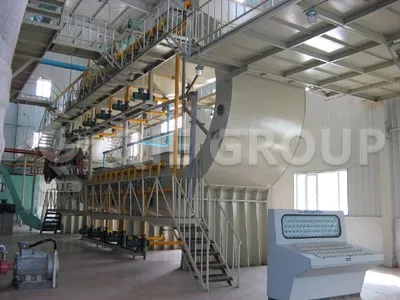
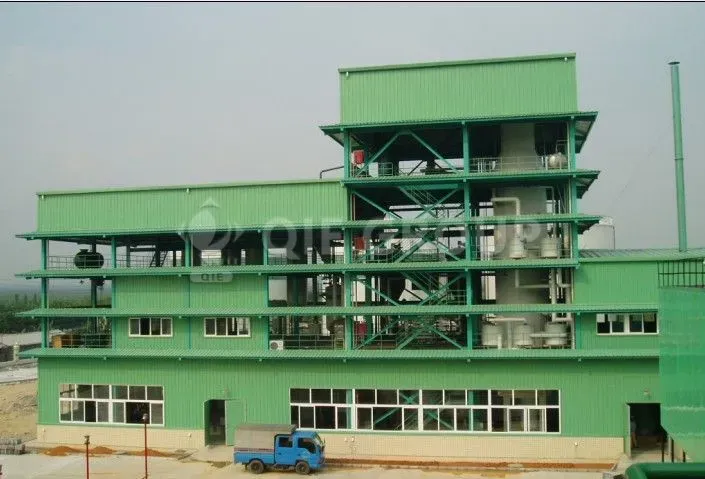
For investors, processors, and engineering teams planning a groundnut oil production line, the process route has a direct impact on oil recovery, product positioning, plant safety, and long-term operating cost. In large-scale commercial production, a pre-pressing and solvent extraction configuration is commonly selected to balance throughput, stable operation, and overall economic performance.
QIE GROUP develops integrated edible oil processing solutions covering pretreatment, pressing, extraction, refining, installation support, and after-sales service. For groundnut processing, the line can be configured according to target product type, plant capacity, required automation level, and local utility conditions.Why Large Groundnut Oil Mills Often Choose Pre-Pressing + Solvent Extraction
Groundnut is a high-oil-content material, typically around 45%–55%. For large projects, using only a mechanical expeller may leave more oil in the cake than many commercial plants can accept. A combined process route improves total oil recovery and supports more efficient use of raw material.
A typical large-scale route is: cleaning → crushing → cooking → pre-pressing → solvent extraction → desolventizing → crude oil handling → refining → finished oil packing. This route is suitable for buyers comparing a large groundnut oil mill, groundnut oil solvent extraction equipment, and commercial groundnut oil expeller systems.
Raw Groundnuts → Cleaning → Crushing → Cooking/Conditioning → Pre-Pressing → Pre-Pressed Cake → Solvent Extraction → Miscella Evaporation & Stripping → Crude Oil → Refining → Finished Groundnut Oil
By-product path: Wet meal → DTDC Desolventizer → Dry, cooled groundnut meal
Pretreatment is not only a cleaning step. It prepares the material so that the groundnut oil expeller and extraction system can work under more stable and efficient conditions. In a commercial line, this section normally includes cleaning, de-stoning, magnetic separation, crushing, and cooking.
Technical note: Cooking temperature can be adjusted approximately within 90–150°C depending on the intended oil style and process route. For large-scale extraction projects, stable conditioning is important because it directly influences pre-press cake structure and extraction efficiency.
In a large groundnut oil production line, pre-pressing removes a substantial portion of oil first and produces a cake with controlled residual oil content. This cake then becomes the feed material for solvent extraction. The goal is not to maximize single-step pressing yield, but to create the right balance between oil discharge and extraction-ready cake structure.
QIE GROUP can configure screw pressing systems with optimized structure for smoother oil discharge, lower wear, and more consistent cake formation. For engineering evaluation, buyers should pay close attention to cake residual oil control, pressing temperature management, and machine wear parts.
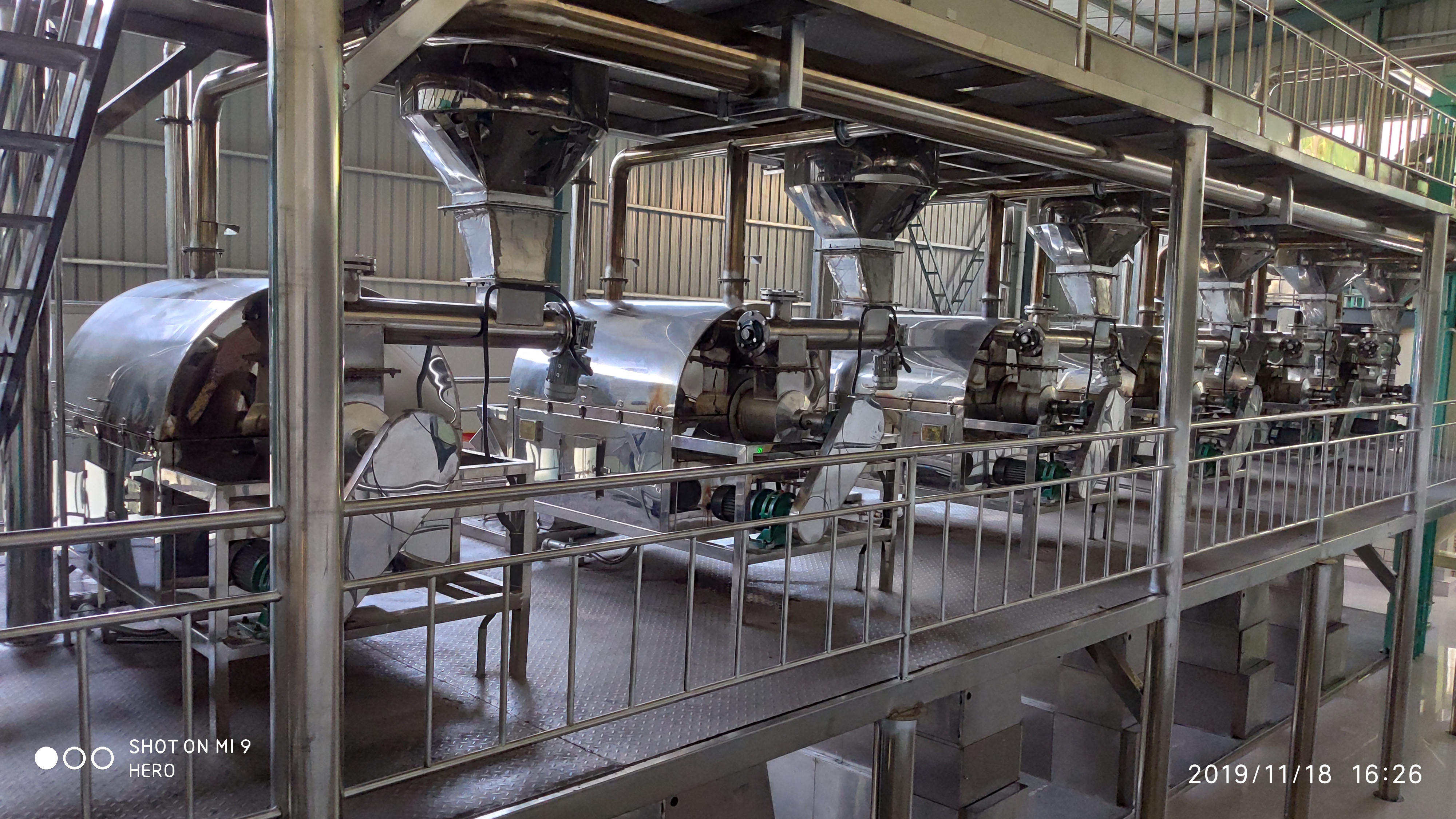
After pre-pressing, the cake still contains recoverable oil. The solvent extraction section is used to improve overall oil recovery and is a key reason why this route is widely used in a large groundnut oil mill. The extraction stage normally works with a continuous extractor and an integrated solvent recovery system.
| Technical Item | Reference Value | What It Means for Buyers |
|---|---|---|
| Residual oil in extracted meal | ≤ 0.8% | Higher overall oil recovery from raw groundnuts |
| Solvent consumption | ≤ 1.5 kg/t | Lower operating cost and easier solvent management |
| Solvent recovery rate | ≥ 99.5% | Supports safety, environmental compliance, and cost control |
| Heat utilization improvement | About 10%–15% | Better thermal efficiency in continuous operation |
A well-designed extraction workshop is not only about oil yield. It must also address closed-loop solvent handling, negative-pressure operation, vapor recovery, and stable meal desolventizing.
Refining removes phospholipids, free fatty acids, pigments, odor components, and other impurities from crude oil. For large industrial projects, the standard route usually includes degumming, deacidification, decolorization, and deodorization. The exact configuration depends on whether the target product is standard refined edible oil or a flavor-focused roasted oil.
| Refining Step | Purpose | Engineering Consideration |
|---|---|---|
| Degumming | Remove gums and phospholipids | Improves downstream refining stability |
| Deacidification | Reduce free fatty acids | Can be chemical or physical, depending on process design |
| Decolorization | Remove pigments and trace impurities | Adsorbent handling and filtration quality matter |
| Deodorization | Remove odor compounds and improve stability | Requires high vacuum and precise temperature control |
QIE GROUP offers continuous refining systems, with batch-type refining available for capacities up to around 30 TPD. In suitable projects, refining energy consumption can be reduced by about 10%–15% through process optimization and system integration.

| Comparison Item | Flavor Pressing Route | Pre-Pressing + Solvent Extraction Route |
|---|---|---|
| Typical product positioning | Premium aromatic oil with strong roasted flavor | Standard refined oil for commercial supply |
| Core advantage | Distinct flavor profile | High total oil recovery and better large-scale economics |
| Investment level | Lower equipment investment | Higher investment due to extraction and refining systems |
| Oil yield | Lower overall yield | Very high overall recovery, commonly over 98% |
| Best fit | Niche retail, premium gift market, flavor-focused brands | Food industry, retail supply, and large-volume edible oil production |
For buyers comparing project options, QIE GROUP can support technical discussion around:
Its main advantage is higher total oil recovery in large-scale production. Pre-pressing removes part of the oil mechanically, and solvent extraction recovers more oil from the remaining cake, which helps improve raw material utilization and overall processing economics.
A large line commonly includes a cleaning sieve, destoner, magnetic separator, crusher, cooker, pre-press machine, extractor, DTDC desolventizer, evaporation and stripping system, and refining equipment such as degumming centrifuge, deacidification unit, bleaching tower, filters, and deodorization tower.
No. It is generally more suitable for larger-capacity plants where higher oil recovery justifies the added equipment, safety systems, and investment. Smaller projects focused on aromatic pressed oil may choose a pressing-only route instead.
Important points include extractor type, residual oil in meal, solvent consumption, solvent recovery rate, workshop sealing, negative-pressure control, tail-gas treatment, desolventizing performance, and compatibility with local safety and environmental requirements.
Yes. QIE GROUP provides integrated edible oil processing solutions and can discuss equipment configuration based on capacity, target oil type, utility conditions, process route, and project layout. The final setup should be determined according to actual technical and commercial requirements.
If you are evaluating a groundnut oil production line for large-scale pre-pressing and solvent extraction, QIE GROUP can help you review process logic, key equipment, and practical selection factors before procurement. This is especially useful when comparing plant capacity, oil yield targets, refining scope, and solvent workshop requirements.