1. Market Context: Scaling Peanut Oil Capacity in 2026
In 2026, the global demand for high-purity vegetable oils has shifted the focus toward efficient, large-scale processing. For investors, the 50-100 TPD (Tons Per Day) range represents the strategic "sweet spot"—small enough for regional market control but large enough to utilize industrial-grade automation. Peanut oil, with its high oil content of 45%–55%, requires a specialized technological approach to ensure that high input costs are offset by maximum extraction efficiency. Modern 2026 facilities must choose between "Aromatic Pressing" for premium niche markets or "Pre-press Extraction" for mass-market dominance.
2. 2026 peanut oil plant Cost: Understanding the Price Drivers
The 2026 peanut oil plant cost is no longer dictated solely by steel weight, but by technical efficiency. Modern quotations are driven by the integration of PLC-controlled systems and high-precision sensors. A 100 TPD facility requires a significant investment in specialized alloys for the screw presses and hermetically sealed environments for the extraction sector. By investing in high-spec components (such as Siemens/ABB electrics and Cr12 alloy wear-parts), the peanut oil production line price is offset by a 15% reduction in annual maintenance costs and a substantial increase in the "Up-time" of the refinery towers.
.png)
3. Technical Path: Pressing vs. Solvent Extraction
For an industrial 100 TPD project, the choice between "Full Pressing" and "Pre-press Extraction" is a matter of pure economics. Traditional pressing leaves approximately 6%–8% residual oil in the cake. In contrast, our industrial peanut oil extraction equipment price includes a negative-pressure solvent system that reduces the residual oil in meal to ≤0.8%. In a 100 TPD plant, this 5% difference in yield translates to an additional 5 tons of oil per day—representing a massive increase in the facility's annual revenue and a much shorter payback period for the investor.
4. 100 TPD Peanut Oil Machinery Budget: Stage-by-Stage
A realistic 100 TPD peanut oil machinery budget must cover four critical engineering stages:
- Pre-treatment: Vibratory cleaners and magnetic separators to protect downstream equipment.
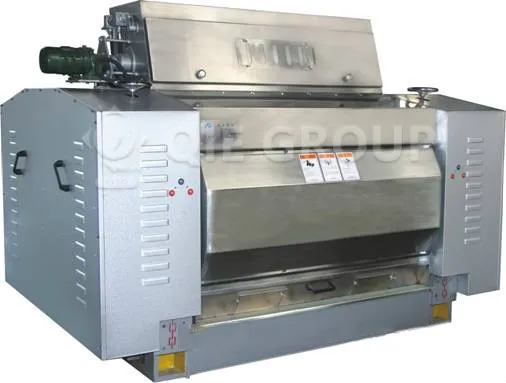
- Flaking & Conditioning: Adjusting material to 0.3-0.5mm thickness to destroy cell structures for maximum penetration.
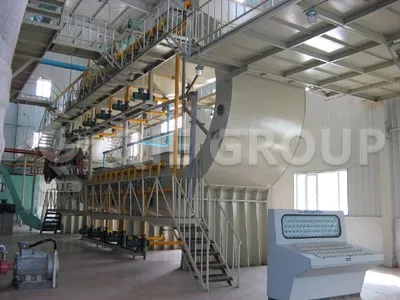
- Extraction: Utilizing Rotocel extractors and DTDC systems to recover 99.5% of the solvent used.
- Full Refining: A 4-stage process including centrifugal degumming and high-vacuum deodorization (220-260°C).
5. OPEX Analysis: Beyond the Initial Ticket Price
The true peanut oil production line price includes the long-term utility consumption. Our 2026 designs utilize Multi-effect Negative Pressure Evaporation, which recycles the thermal energy from secondary steam to heat the miscella. This engineering feat reduces steam consumption by 20% compared to legacy plants. Furthermore, our solvent loss standards are strictly maintained at ≤1.5kg/t. By minimizing these recurring costs, the facility achieves a competitive edge in the global market.
6. Refinery Excellence: Meeting International Grade 1 Standards
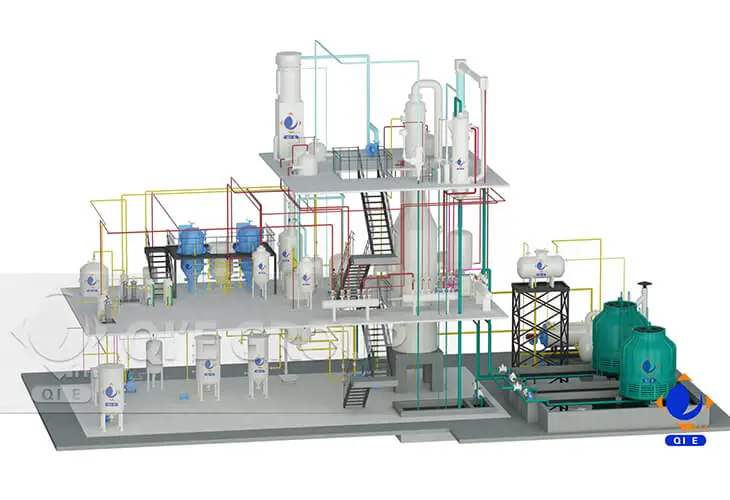
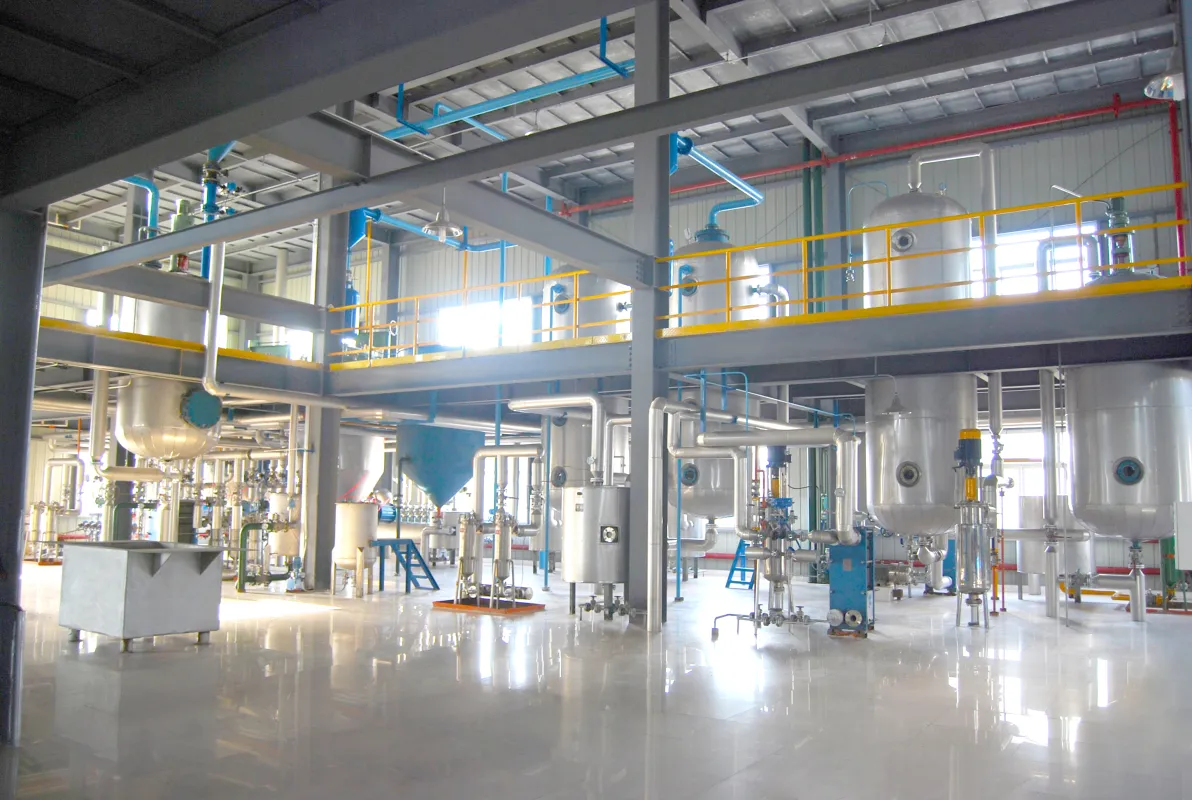
Crude peanut oil contains gums, waxes, and Free Fatty Acids (FFA) that must be removed for a "Grade 1" finish. Our refinery section employs Physical Refining (Distillation) for high-FFA materials, avoiding the neutral oil loss and soapstock wastewater common in chemical alkali refining. The deodorization stage, operating under 1-2mmHg vacuum, removes volatile odors, resulting in an oil that meets the most stringent EU and North American food safety regulations.
.png)
7. Global Compliance: ISO & CE Certified Engineering
Every component of our industrial peanut oil lines is engineered to meet ISO 9001 and CE safety standards. We utilize food-grade stainless steel for all oil-contact surfaces to prevent heavy metal migration. The integration of automated safety interlocks in the extraction plant prevents solvent vapor leakage, ensuring compliance with local environmental protection laws.
8. EPC Turnkey Service: From Factory Layout to Commissioning
Selecting an EPC (Engineering, Procurement, and Construction) partner eliminates the risk of technical misalignment. Our turnkey service begins with a customized 3D factory layout. After manufacturing, our senior engineering team provides on-site supervision for assembly, PLC programming, and final commissioning, along with staff certification for your technical team.
9. Sustainability: Energy Recovery & Zero-Emission Standards
Modern investors in 2026 demand green metrics. Our plants feature advanced Heat Recovery Systems that capture exhaust heat from the DTDC units to pre-heat boiler feed water. Our mineral oil absorption towers ensure that solvent discharge into the atmosphere is near-zero, qualifying many projects for "Green Financing" and carbon credits.
10. Conclusion: Securing Your Edge with Penguin Group
Investing in a 50-100 TPD industrial peanut oil production line is a significant strategic move. By choosing a turnkey solution, you are purchasing a contractual guarantee on yield, energy efficiency, and oil clarity. Let our decades of grease engineering expertise secure your project's future in the competitive landscape of 2026.
Frequently Asked Questions about Peanut Oil Production Line Prices
Q1: How does the 2026 peanut oil plant cost compare to previous years?
While initial CAPEX has risen due to advanced automation, the ROI is faster. Increased extraction efficiency (≤0.8% residual oil) and lower solvent loss mean that the total cost of ownership is lower in the long run.
Q2: What is included in the 100 TPD peanut oil machinery budget?
A standard budget includes the full pre-treatment line, pre-pressing machines, the solvent extraction plant (extractor, DTDC, evaporation), and the full refinery section with PLC control.
Q3: Why is the extraction equipment price higher than simple pressing?
The higher price reflects the sophisticated safety and recovery systems required for Hexane. However, it is the only method to achieve a residual oil rate below 1%, which is critical for industrial profitability.
Q4: Can this line handle other oilseeds?
Yes. While optimized for peanuts, the pre-treatment and extraction sections can be modularly adjusted to process soybeans, sunflower seeds, or rapeseeds.
Q5: Do you provide on-site installation and staff training?
Absolutely. As an EPC provider, we handle on-site assembly supervision and provide intensive training for your technical staff to ensure smooth daily operations.