Home > News > High-yield peanut oil production: Has your extraction line been optimized for aroma?

High-yield peanut oil production: Has your extraction line been optimized for aroma?

2026-04-16

A precise synergistic process of processing, pressing and leaching refining

For investors in the global edible oil industry, peanut oil is a highly sought-after commodity. Peanuts have an oil content as high as 45%-55% , offering not only high yield but also a unique aroma that is loved by consumers. For producers, achieving " low residual oil and high flavor " is the core objective, and the key to achieving this lies in the precise coordination of the two core processes: pretreatment and pressing.

Phase 1: Superior Pre-treatment Process

In peanut oil processing, the pretreatment stage determines whether the raw materials are in the optimal physical state for oil extraction. QIE GROUP 's solution ensures that the raw materials meet the following standards before entering subsequent stages:

1. Precise cleaning and crushing

The use of high-efficiency vibrating cleaning screens and magnetic separators protects expensive downstream machinery from damage by impurities and ensures the purity of crude oil from the source.

2. Scientific steaming and stir-frying (90–150°C)

By controlling temperature and humidity, the Maillard reaction is induced, producing a unique nutty aroma. Custom processing options are available for both strong and light aroma profiles.

3. Optimize the rolled blank (0.3–0.5 mm)

The material is rolled into uniform thin sheets, which completely destroys the cell walls and creates a huge contact surface area for subsequent oil extraction.

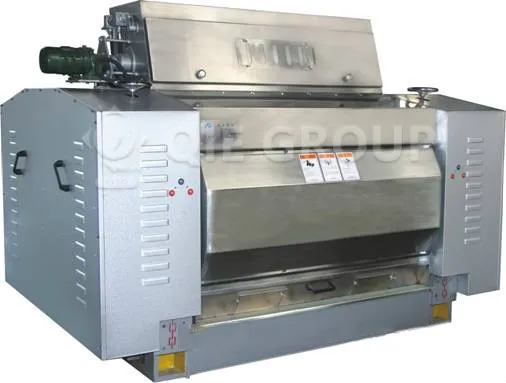
QIE GROUP Peanut Oil Pretreatment Equipment: Activates the rich aroma of peanuts through scientific steaming and roasting.
The steaming and roasting pan in the peanut oil pretreatment production line increases the oil yield of peanuts during pressing.


Phase Two: Dual-Mode Extraction Path

Rich and fragrant small-batch pressing mode

Employing a specialized spiral pressing system and precise temperature control, it targets the high-end gift oil and premium grain and oil market, producing high-value-added crude oil.

High-capacity pre-crushing mode

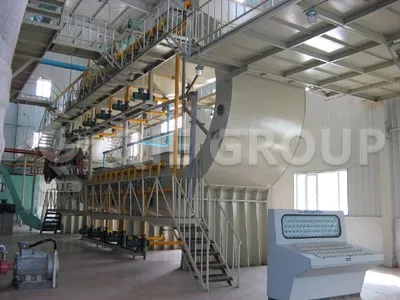
For large-scale production, mechanical extraction of 30%–35% of the oil provides an ideal pre-pressed cake for the next stage of solvent extraction .
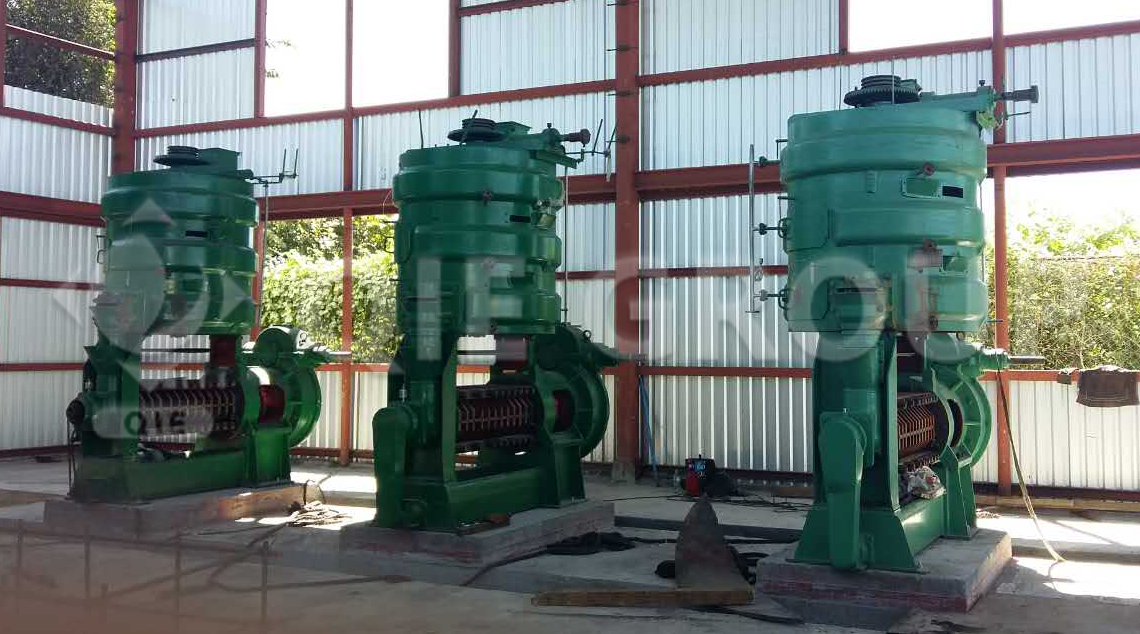
High-efficiency peanut oil press system: Guarantees an oil yield of 80-90%.
QIE GROUP adjusts the press according to the different local needs and requirements of each customer to ensure the oil has a unique flavor.


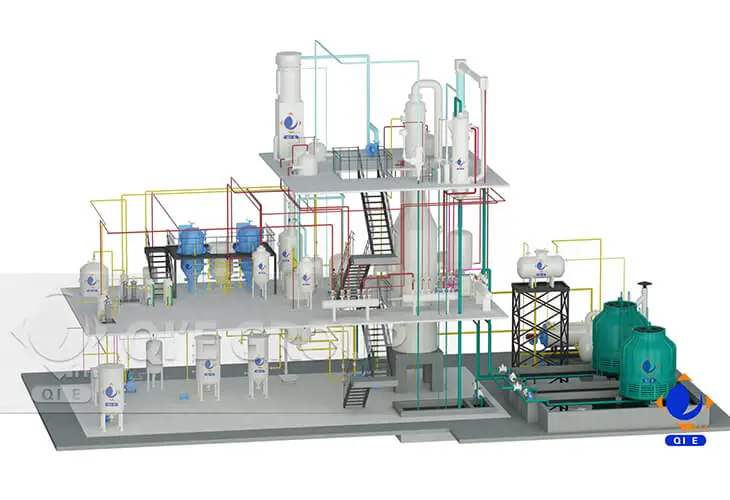
Phase 3: Synergistic Effect of Leaching and Refining

To meet the international standard of ≤ 0.8% total residual oil content, secondary leaching is an inevitable choice for large-scale plants.

  • Full negative pressure leaching system: ensures production safety, solvent loss is controlled at ≤ 1.5kg/ton, and recovery rate is ≥ 99.5%.
  • Physical refining technology: Removes free fatty acids (FFA) while reducing energy loss by 10%-15% without compromising the stability of oils.

QIE GROUP provides you with a highly customized, one-stop peanut oil production line through "turnkey projects".

Frequently Asked Questions

1. How exactly does the steaming/frying temperature affect the quality of peanut oil?

High-temperature steaming at 120°C to 150°C is key to bringing out the aroma of nuts. For optimal cold-pressed nutrition, the temperature should be kept below 70°C. Our equipment supports flexible temperature adjustment over a wide range.

2. Do all peanut oil factories need to be equipped with an extraction system?

This depends on capacity and ROI. Small boutique oil mills can simply use pressing; medium and large oil mills must add solvent extraction lines to reduce residual oil to below 0.8% and maximize profits.

3. What is the practical significance of a billet thickness of 0.3–0.5 mm?

This is the "golden range" for physical oil extraction. It can thoroughly destroy cells while maintaining the material structure, preventing excessive powder production, and ensuring solvent penetration efficiency.

4. How does QIE GROUP ensure the safety of the leaching process?

It adopts a fully enclosed negative pressure system, an explosion-proof motor, and a real-time gas sensor, combined with low-temperature exhaust gas recovery, which significantly reduces solvent costs while ensuring safety.

5. Will the aroma of strong-smelling peanut oil be lost during the refining process?

Improper processing can indeed cause this. By precisely controlling the deodorization time and vacuum level, we remove impurities and improve the smoke point while preserving the captivating aroma to the greatest extent possible.

Name *
Email *
Message*
Recommended Products