2026 Price of Turnkey Groundnut Oil Production Line Project in Libya
2026-04-01
Investing in a
Groundnut oil production line price Libya 2026 requires a deep understanding of the local North African supply chain. Libyan groundnuts are characterized by their high oil density and potential for high acid values due to storage temperatures. Our 2026 turnkey solutions utilize a hybrid "Pre-pressing + Solvent Extraction" approach to ensure a total residual oil rate of
≤0.5%, maximizing your ROI through energy-efficient heat recovery and AR-guided onsite commissioning.
1. Pre-treatment: Engineering for Maximum Cell Rupture
The foundation of a
Turnkey peanut groundnut oil processing plant quotation 2026 lies in the pre-treatment section. According to our internal engineering standards, we prioritize the "Cell Rupture" path.
First, the
Cleaning & De-stoning stage removes 99% of impurities to protect the high-speed rollers. Then comes the
Crushing & Flaking: groundnuts are crushed to uniform particles and then flaked to a thickness of
0.3-0.5mm. This precision flaking is critical; it creates a massive surface area that allows the solvent to penetrate deep into the material during the extraction stage. Finally, we apply
Steam Conditioning at 100-120°C to adjust the moisture to a perfect
7%-8.5%, ensuring the material has the ideal plasticity for pre-pressing without causing "slippage" in the expellers.
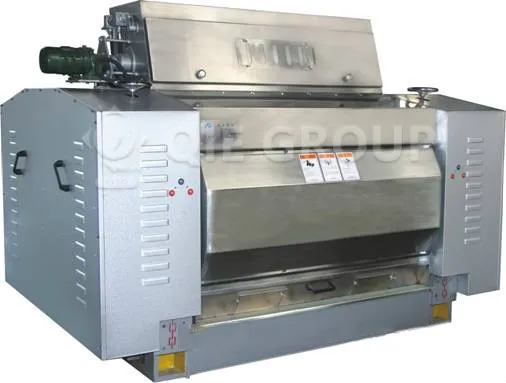
Integrated pre-treatment roadmap for Libyan groundnut oil plants, optimizing moisture to 7%-8.5% and conditioning to 100-120°C for maximum cell disruption
For any
Cost of 20-100 TPD automatic peanut oil extraction refinery in Libya, solvent management is the primary operational expense. Our 2026 system utilizes a
Rotocel or Loop-type Extractor for counter-current washing.
The wet meal is then processed in our specialized
DTDC Desolventizer-Toaster. By maintaining a stable
0.35 MPa steam pressure, we ensure that the meal is completely desolventized, resulting in a safe, high-protein byproduct for the Libyan feed market. Our
Negative-Pressure Evaporation technology allows us to separate solvent from the oil at lower temperatures, preserving the natural nutrients and nutty aroma. The performance benchmark for our 2026 line is a solvent loss of
≈1.5 kg per ton and a solvent recovery rate of
≥99.5%.
To meet the "Grade-1" standard in North Africa, the crude oil must be stripped of impurities through four critical stages.
Degumming removes phospholipids via centrifugal separation at 80°C. For Libyan groundnuts, which may have elevated FFAs, we implement
Physical Refining (Steam Stripping). This modern approach removes free fatty acids under high vacuum (1-2 mmHg) without producing soapstock, significantly reducing neutral oil loss and wastewater treatment costs. The final
Deodorization at 220-260°C removes any grassy or "off" odors, ensuring a smoke-point that meets international export quality.
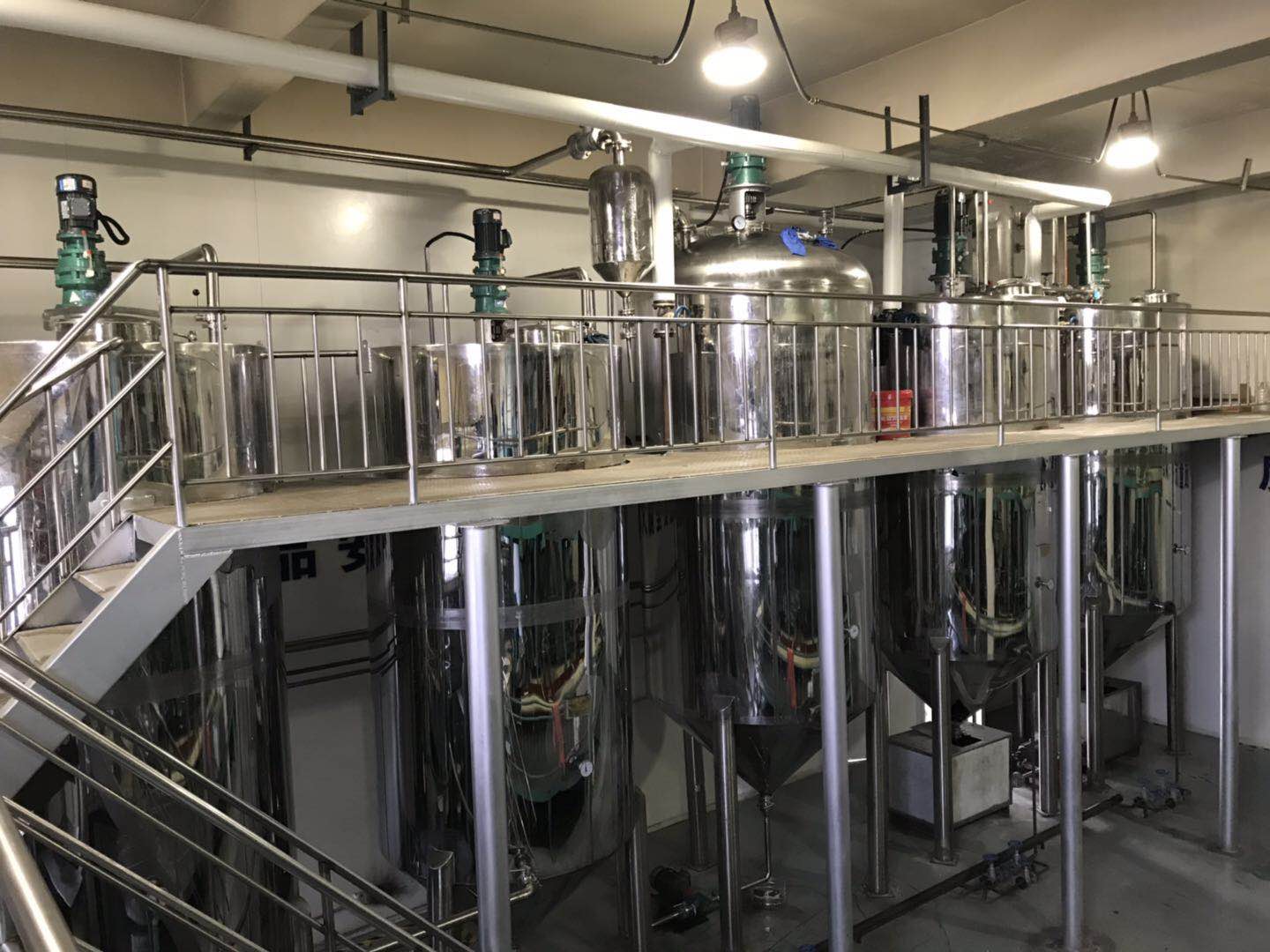
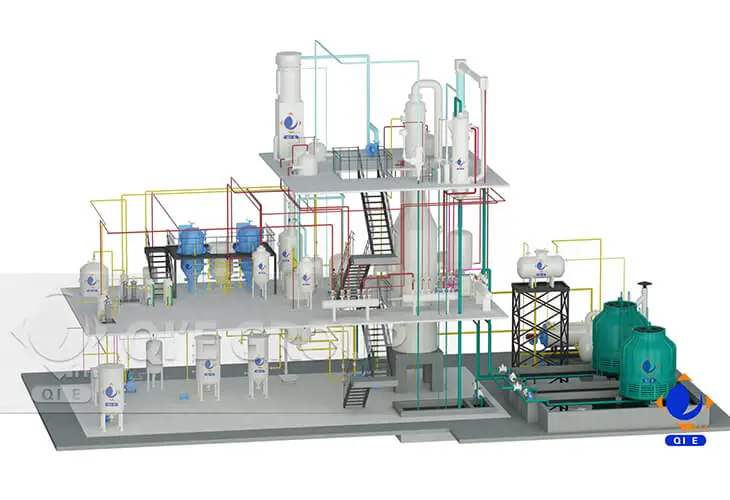
Industrial groundnut oil solvent extraction unit with negative pressure evaporation and energy-saving DTDC
2026 Engineering FAQ: Maximizing ROI in Libya
Q1: How do we control solvent loss in the Libyan heat?
We use a secondary vent gas recovery system with frozen-water condensation. This ensures that even in 40°C+ ambient temperatures, our solvent recovery remains ≥99.5%, protecting your
2026 ROI analysis for peanut oil milling project in Libya.
Q2: Why is the residual oil target ≤0.5%?
In industrial-scale plants (50-200 TPD), a 1% difference in residual oil represents thousands of dollars in lost profit annually. Our DTDC and extractor optimization ensure you capture every drop.
Q3: What steam pressure is required for the system?
The entire line is balanced for 0.35 MPa. This pressure is vital for the multi-stage evaporation and the toaster layers, ensuring efficient heat transfer without scorching the oil.
Q4: Do you provide onsite training in Libya?
Yes. Our 2026 service package includes 3-6 months of onsite engineering presence and AR-supported remote monitoring to train local staff on PLC operations.
Ready to Start Your Groundnut Oil Project?
Our 20-40 year experienced engineers are online to provide 24H technical support.

.jpg)