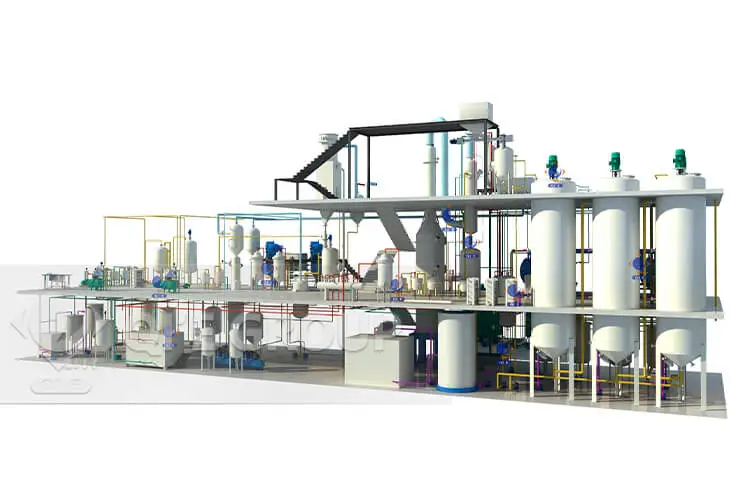
Configuring a groundnut oil production line is not only about buying a press. In practical mill planning, the final oil quality, plant efficiency, operating cost, and expansion flexibility depend on how the pretreatment section and the pressing section work together. QIE GROUP supplies groundnut oil processing solutions built around this matching logic, helping buyers evaluate groundnut pretreatment and pressing equipment selection step by step.
This page is designed for factory investors, technical managers, and equipment buyers who need a clear basis for process discussion, machine selection, and project planning. It covers the main equipment from shelling and cleaning to cooking and pressing, and also explains when a simple pressing line is suitable and when a pre-pressing plus solvent extraction route makes better commercial sense.
Groundnut has a relatively high oil content, typically around 45%–55%. Because of this, equipment configuration should be based on the target product, capacity, and expected return. For smaller projects focused on aroma and premium positioning, a pressing-based line may be the preferred choice. For larger plants targeting high oil recovery and lower unit cost, a pre-pressing + solvent extraction + refining route is often more suitable.
A practical complete groundnut oil equipment configuration checklist usually considers these sections: shelling, cleaning, magnetic separation, destoning, crushing, cooking, optional flaking, screw pressing or pre-pressing, and where required, extraction and refining.
Typical flow: Raw material intake → cleaning → crushing → high-temperature cooking (about 150°C) → screw press or small press → oil cooling / crude filtration → light degumming or cold filtration → storage / packing
Typical application: Premium roasted groundnut oil with strong natural flavor.
Key buyer focus: flavor retention, stable cooking control, smaller capacity, and lower initial equipment investment.
Typical flow: Raw material intake → cleaning → crushing → cooking (about 120°C, adjustable) → pre-pressing → solvent extraction → mixed oil desolventizing → crude oil → refining → finished oil packing
Typical application: Standard edible oil production at larger scale.
Key buyer focus: oil recovery, operating economy, solvent safety management, and downstream refining quality.
Shelling is often considered when incoming groundnuts contain shells or when buyers want better control over meal quality and line cleanliness. Proper shell removal can reduce unnecessary wear on downstream machines and improve the consistency of crushing and cooking.
This stage prepares clean raw material for stable processing. Common machines include high-efficiency cleaning sieve, destoner, and magnetic separator. These machines help remove dust, stones, and metal contaminants before crushing and cooking.
Why it matters: Better cleaning lowers equipment wear, reduces blockage risk, protects the screw press, and supports more stable oil quality.
Crushing breaks the kernel into a more uniform particle size, which improves heat transfer in cooking and helps create the right material structure for pressing or pre-pressing. Uniform size is especially important when buyers want stable machine loading and predictable oil release.
Cooking is one of the most important stages in a groundnut oil mill equipment line. It adjusts moisture and temperature, improves cell structure, promotes oil release, and influences final flavor.
Depending on project design, flaking or additional conditioning may be used before pre-pressing to improve material permeability and make the next stage more efficient. Whether this section is necessary depends on throughput, target oil recovery, and the overall process route.
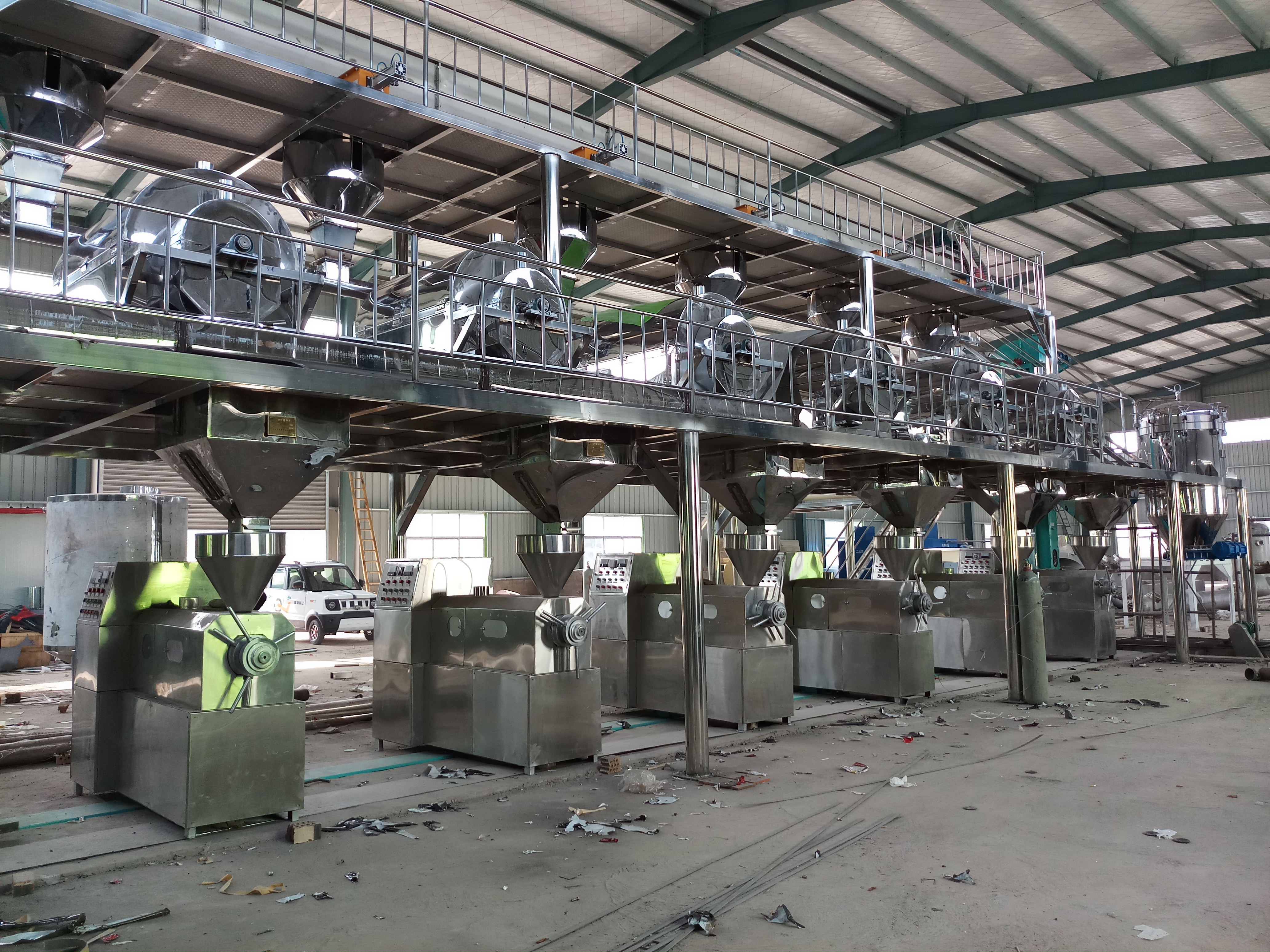
The pressing stage determines whether the line functions as a direct pressing plant or as the front end of an extraction project.
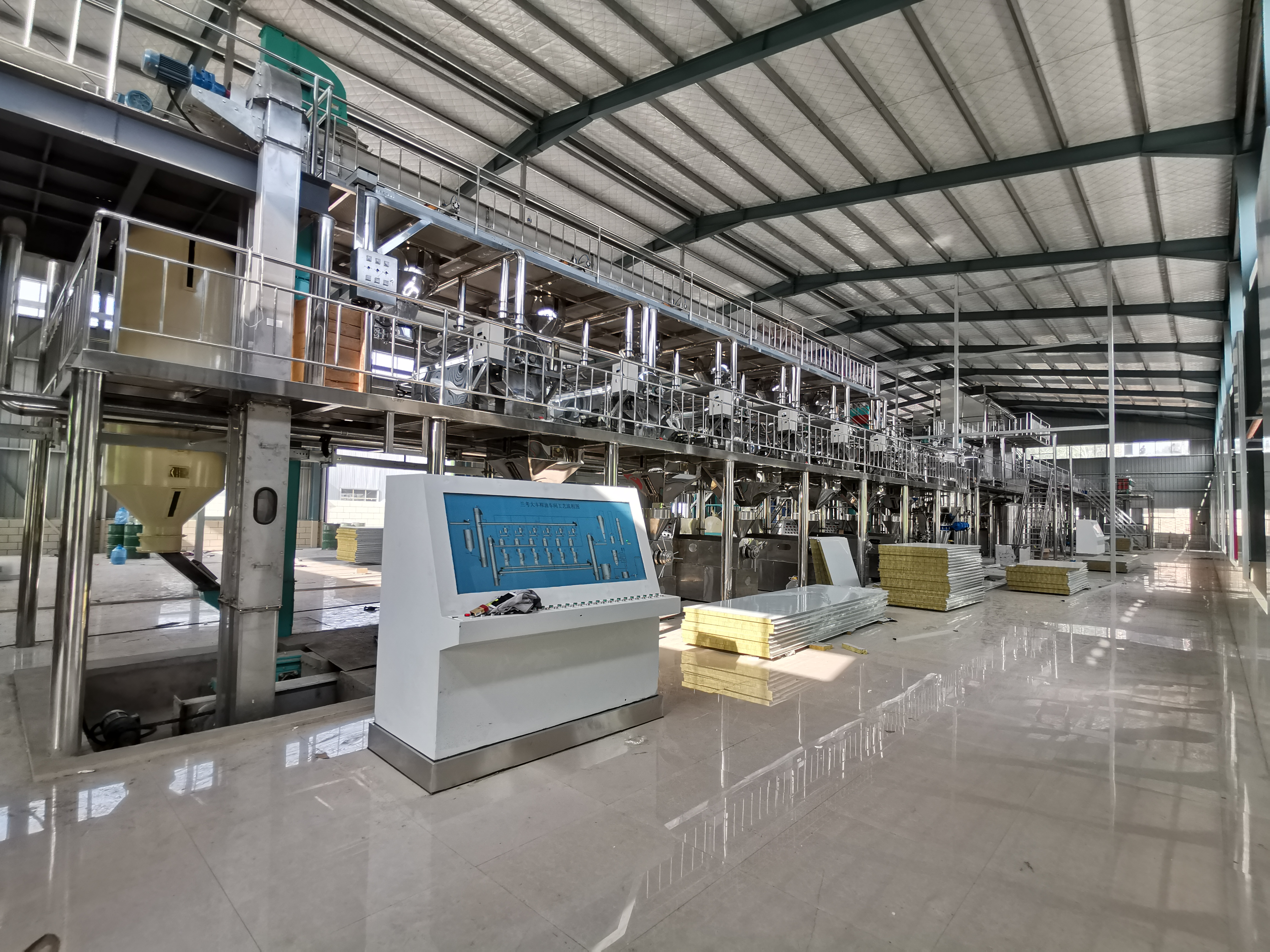
| Equipment | Function | Buyer Evaluation Points |
|---|---|---|
| Cleaning sieve | Removes light impurities and improves raw material quality | Cleaning efficiency, ease of maintenance, adaptability to raw material condition |
| Destoner | Removes stones and heavy foreign matter | Protection for downstream crushers and presses, stable operation |
| Magnetic separator | Removes metal contaminants | Machine safety, magnetic strength, maintenance access |
| Crusher | Controls particle size for better conditioning | Uniform output size, throughput matching, wear parts |
| Cooking pot / cooker | Adjusts moisture and temperature, supports flavor development | Temperature control range, heating uniformity, process flexibility |
| Screw oil press | Mechanical oil extraction | Oil discharge stability, residual oil in cake, wear resistance, automation level |
| Pre-press machine | Partial oil removal before extraction | Cake residual oil control, throughput, suitability for extraction section |
| Process Mode | Main Equipment | Typical Oil Yield | Residual Oil in Cake | Typical Use |
|---|---|---|---|---|
| Aroma pressing mode | Small screw press or hydraulic press | About 35%–40% | About 6%–8% | Premium flavored oil |
| Pre-pressing mode | Large screw pre-press | About 30%–35% | About 16%–20% | Feed section for solvent extraction |
If the project is configured as a full pre-pressing and extraction line, the overall oil recovery can be improved by about 3%–5% compared with a simpler route, depending on raw material condition and final process design.
For larger-scale investment, pressing equipment alone may not be enough. If the objective is to maximize recovery from pre-pressed cake, a solvent extraction section can be added. Typical equipment may include loop extractor, drag chain extractor, rotocel extractor, DTDC desolventizer, full negative-pressure evaporation system, and solvent condensation recovery units.
If the finished oil target is standard refined edible oil, the downstream refining section may include degumming centrifuge, deacidification tower, bleaching tower, filters, and vacuum deodorization tower. For strong-flavor groundnut oil, deodorization is generally avoided because it removes the natural aroma compounds.
| Selection Factor | Aroma Pressing Line | Pre-Pressing + Extraction Line |
|---|---|---|
| Product positioning | Premium oil with strong roasted flavor | Standard refined oil for mass market |
| Main value | Flavor and brand differentiation | High oil recovery and operating economy |
| Equipment investment | Relatively lower | Higher due to extraction and refining sections |
| Oil yield priority | Moderate | Very high |
| Technical control point | Cooking intensity and flavor preservation | Cake residual oil control and extraction safety |
| Best fit buyers | Smaller plants, premium brands, regional specialty oil producers | Industrial investors, large edible oil factories, commercial scale processors |
Many buyers ask how much does groundnut oil mill equipment cost, but the answer depends on configuration depth rather than one machine alone. In most cases, pricing is influenced by the following factors:
A reliable quotation should be based on process route, capacity, product target, and utility conditions. A low initial machine price may lead to higher operating cost or lower oil recovery if the line is not configured correctly.
As a manufacturer focused on grain and oil machinery since 1999, QIE GROUP supports customers with integrated thinking across process design, equipment matching, manufacturing, installation, commissioning, and after-sales service. For a groundnut oil production line, this means the discussion can start from your market target and raw material condition, then move into a practical configuration of pretreatment, pressing, extraction, and refining sections where required.
If you are comparing equipment for a new plant or upgrading an existing line, a structured technical discussion can help avoid over-configuration, under-sizing, or process mismatch.
A basic line usually includes cleaning equipment, magnetic separation, destoning, crushing, cooking, and a screw oil press. If the raw material arrives with shells, shelling equipment may also be required.
Direct pressing is often chosen for smaller projects or premium flavored oil. Pre-pressing plus extraction is better for larger plants that prioritize maximum oil recovery and lower processing cost per ton.
In most configurations, yes. Cooking helps adjust moisture and temperature, improves oil release, and can strongly affect flavor. The exact temperature depends on whether the target is aroma-rich oil, lighter oil, or a pre-pressing route.
Look at oil discharge stability, residual oil in cake, wear rate, temperature control, crude oil clarity, and whether the machine matches your pretreatment condition and planned capacity.
Yes. A custom plan is usually the best approach because equipment matching depends on raw material condition, target oil type, capacity, automation level, and whether extraction or refining is included.