Home > News > How is automation technology changing peanut oil production lines?

How is automation technology changing peanut oil production lines?

2025-12-23
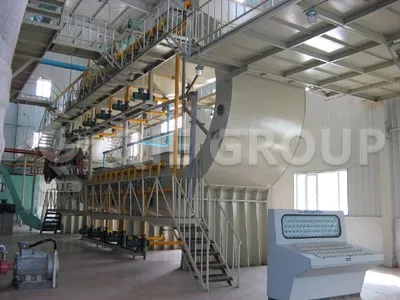
QIE GROUP provides peanut oil factories with integrated solutions centered on full-stack automation, encompassing raw material cleaning, shelling, pressing/pre-pressing, extraction, refining, and bottling. These solutions comply with CE/ISO and food safety regulations, facilitating compliant implementation across different regions.
17榨油机-110型.jpg

How is automation technology changing peanut oil production lines?

Faced with fluctuating raw material prices, labor shortages, and continuously upgrading food safety standards, the competitive advantage of peanut oil production is shifting from single-machine equipment to systematization, digitalization, and full-process automation. QIE Group, combining its experience in process engineering and industrial automation, provides oil companies with comprehensive automated oil production line solutions, covering process design, selection of automated peanut oil production machines, digital integration, and operational optimization.

Why upgrade to an automated peanut oil production line now?

The global peanut oil market has maintained steady growth in recent years (with a compound annual growth rate of about 4-5%). Automation upgrades the traditional decentralized and experience-based production methods into a visible, measurable, and traceable continuous manufacturing process, which helps producers keep quality and costs within a controllable range while improving their responsiveness to changes in market demand.

  • From "human control" to "numerical control": replacing manual adjustments with PLC/SCADA, batch formulation, and closed-loop control significantly reduces fluctuations.
  • From "point optimization" to "line optimization": connecting the entire process of cleaning and pretreatment , pressing/leaching, refining, and filling to achieve energy cascade recovery and process synergy.
  • From "experience-based judgment" to "online judgment": Introducing online NIR moisture/oil content, FFA and color analysis to reduce offline waiting and rework.

Key aspects of automation change

1. Raw material receiving and sorting: Vibrating screen, destoner, and permanent magnet iron separator are linked for metering; RFID/barcode warehousing and batch tracking are implemented, and supplier quality profiles are automatically generated.

2. Pretreatment: Dehulling, crushing, rolling and steaming are driven by the formula curve, the steam valve group and air volume are controlled in a closed loop, the moisture and temperature curves are visible online, and the compressibility of the flat pieces is stabilized.

3. Pressing/Leaching: Twin-screw pre-pressing or full-pressing + rotor leaching tower (optional), automatic adjustment of meal layer thickness, leaching solvent temperature and circulation rate to reduce residual oil.

4. Crude oil purification and refining: Automatic backflushing of plate and frame/leaf filters, cascade control of acid refining degumming, alkali refining deacidification, decolorization and deodorization sections, and PID control to maintain and set vacuum and temperature.

5. Filling and downstream logistics: mass flow meter filling, automatic capping and labeling, machine vision verification and robotic palletizing, MES integration with WMS to achieve finished product traceability.

Quantifiable benefits: from OEE to cost per ton

Based on QIE Group's experience in multiple projects, automated oil production lines can significantly improve key performance indicators under similar raw material and shift conditions. The following data represent common improvement ranges, which depend on raw material moisture content, equipment age, and capacity load.

index Traditional lines Automated peanut oil production line (QIE reference)
Overall Equipment Effectiveness (OEE) 55–70% 70–88%
Increased oil yield benchmark +0.5–1.2 percentage points
Reduced energy consumption 10–20% (combined steam and electricity)
Human input High, depends on proficiency Reductions of 30-50%, with job roles shifting towards inspection and data analysis.
Downtime/Switchover Time Long shifts and product category switching Shorten by 20-40%, CIP automatic cleaning
Processing cost per ton Significantly affected by fluctuations A decrease of 8–15% (based on comprehensive optimization calculations).

Capacity and Configuration Recommendations (Selection Reference)

Line size Typical production capacity (t/d) Key points of automation Applicable Scenarios
compact 5–20 Modular pretreatment + full pressing, semi-automatic filling, cloud-based lightweight SCADA New factory, specialty oil products and trial production
Standard type 50–200 Pre-compression + leaching, continuous refining and automated filling, MES batch traceability Regional Brands and OEM Manufacturing
Large continuous 300–1000 End-to-end DCS/SCADA, energy cascade recovery and central CIP, robotic logistics Large-scale supply and multi-brand matrix

Energy consumption reference: Under stable operating conditions, steam consumption can be controlled within a common range and optimized with heat integration; electricity consumption is significantly affected by the pressing/leaching path and the moisture content of the material. During the feasibility study stage, the QIE engineering team will provide energy consumption calculations and optimization space assessments based on the shell content and moisture distribution of the raw materials.

Quality and Compliance: Incorporating "Stability" into the Process

  • Food safety: HACCP and ISO 22000 system implementation; online monitoring and electronic recording of critical control points (CCPs).
  • Electrical and Explosion-proof: CE/UL electrical standards, ATEX/IECEx level configuration for solvent areas, and dual protection with interlocks and gas detection.
  • Traceability: Batch labels, process data and laboratory results are integrated to support customer and regulatory spot checks.
  • Green and low-carbon: heat recovery and heat exchange, vacuum system energy efficiency optimization, and closed-loop condensation and exhaust gas treatment.

Digitalization and Operations: Turning Data into Profit

QIE Group's automated oil production line connects to MES/ERP via edge gateways and OPC UA/MQTT protocols, forming a vertically integrated system.

  • Formula and batch: Oil type, target color and FFA target parameters can be sent with one click, and deviations are automatically recorded and corrected.
  • OEE and Energy Consumption Dashboard: Track downtime, switching and short-term shutdowns at the shift level to identify bottleneck processes.
  • Predictive maintenance: Trend models provide early warnings of abnormal bearing temperature vibration, vacuum and solvent circulation, reducing unexpected downtime.
  • Cost aggregation: Steam, electricity, additives and labor costs are automatically aggregated to each batch, providing cost per ton and optimization suggestions.

Implementation and Service: From Solution to Stable Mass Production

  1. Process package and feasibility study: raw material assessment, capacity balance, energy consumption calculation and investment payback period assessment.
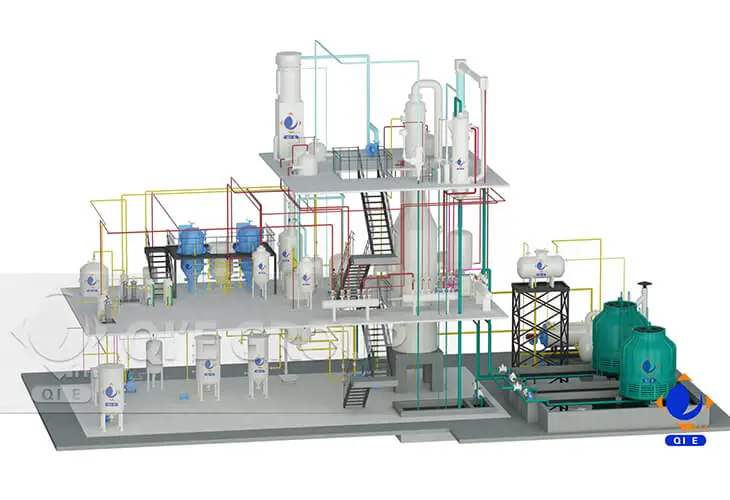
  2. Engineering design and manufacturing: 3D layout, piping and instrumentation diagrams (P&ID), electrical and interlocking matrix, and in-plant data acquisition (FAT) for critical equipment.
  3. Installation and commissioning: On-site E&I construction, cold/hot state linkage, process curve setting, oil yield and quality compliance acceptance (SAT).
  4. Training and Support: Tiered training for operators and maintenance engineers, on-site support during childbirth, and remote diagnostic support.

Regarding budget: The depth of automation and production capacity directly impact CAPEX; from compact to continuous models, investment per ton varies in stages. A reasonable solution will strike a balance between quality, flexibility, and unit cost, avoiding over- or under-allocation.

QIE Group: Partner of Integrated Automated Oil Production Lines

As a supplier specializing in oleochemical engineering, QIE Group provides end-to-end services, from automated peanut oil production machinery to turnkey plant solutions. Our extensive experience in various countries, navigating diverse raw material conditions and regulatory environments, helps clients achieve consistent quality and higher availability at lower operating costs.

  • End-to-end integration: Integrated delivery of process, automation, and digitalization to reduce interface risks.
  • Verifiable benefits: Using oil yield, energy consumption, and OEE as core KPIs, we conduct periodic reviews and optimizations.
  • Global support: Localized installation, commissioning, and spare parts supply; remote operation and maintenance with immediate response.

Schedule a free project assessment and sample making

Obtain a customized automated peanut oil production line solution, assess capacity, energy consumption, and payback period, making every investment more secure.

Obtain the automated peanut oil production line solution from QIE Group
Name *
Email *
Message*
Recommended Products