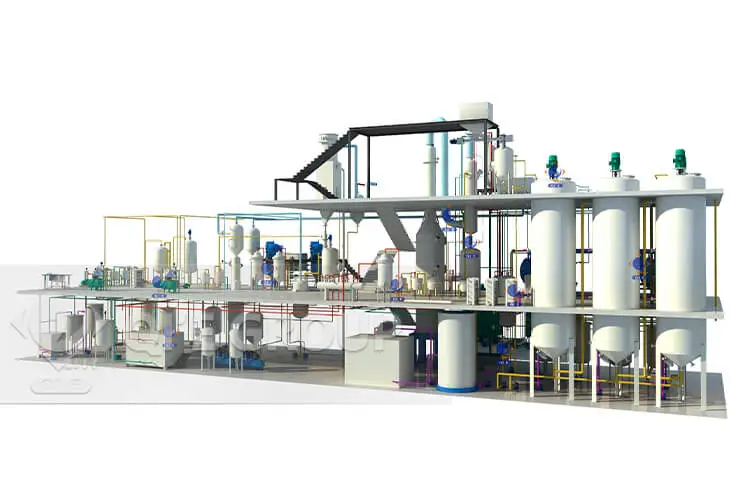
In modern peanut oil processing, the pressing stage directly determines two core indicators: oil extraction efficiency and crude oil quality .
Whether you want to produce fragrant peanut oil or engage in large-scale industrial production of edible oil, the design of the pressing production line will affect the residual oil in the cake, the state of the crude oil, the filtration effect, and the stability of subsequent refining.
A complete peanut oil production line consists of multiple stages, including raw material pretreatment, steaming and roasting, pressing, pre-pressing, and mechanical pressing.
In the peanut oil processing, the pressing stage is a crucial link connecting pretreatment and final oil quality.
The steaming and frying effect, the quality of the pressed dough, the pre-pressing structure, and the stability of the screw press all directly affect the oil yield, residual oil in the cake, the state of the crude oil, and the final flavor performance.
Therefore, a mature peanut oil production line should be viewed as a complete process solution, rather than a combination of individual equipment. By optimizing the synergy between pretreatment, pressing, and filtration, companies can achieve more stable production efficiency, more reasonable oil yield, and more consistent finished oil quality.
A standardized peanut oil production line typically includes the following processes:
Each stage provides stable material conditions for subsequent processes. If pretreatment is inadequate, it will be difficult to maintain stable oil yield and a good cake structure during the pressing stage.
In industrial production, the pressing process mainly undertakes two tasks:
Specific process plans are usually configured based on production capacity, oil product positioning, and market demand.
Before pressing, peanut raw materials need to be pre-treated to bring them to a suitable physical state and heat treatment conditions for pressing.
The cleaning section is mainly used to remove stones, metal, dust and impurities, reduce equipment wear and avoid contaminating the crude oil.
Common equipment includes:
Stable raw material quality helps the entire peanut oil production line achieve continuous and stable operation.
The extraction of high-quality oil begins long before the peanuts enter the oil press. The effectiveness of physical pressing is highly dependent on the structural state and thermal equilibrium of the peanut kernels.
After cleaning, the peanuts need to be crushed to make the particle size more uniform. Uniform particle size facilitates heat penetration during steaming and roasting and improves the oil release efficiency during the pressing stage.
If the particle size difference is too large, it may lead to:
Steaming and roasting are key steps in the entire peanut oil press process.
Steaming and stir-frying can regulate the moisture and temperature of the ingredients, soften the cell structure, and improve the fluidity of the oil. At the same time, proper high-temperature processing can also bring out the unique nutty aroma of rich-flavored peanut oil.
Depending on the product positioning, the steaming and frying temperatures are usually controlled within different ranges.
A stable steaming and frying process can help:
However, excessively high temperatures may cause the oil to darken or increase the risk of oxidation; insufficient temperatures may reduce oil extraction efficiency. Therefore, temperature and moisture control are important factors affecting oil yield and oil quality.
In medium to large-scale projects, pressing and pre-pressing are important steps to improve oil extraction efficiency.
Pressing involves pressing steamed and roasted peanuts into thin sheets to increase the surface area under pressure and improve oil extraction efficiency in subsequent pressing stages.
A well-structured embryo plate helps to:
Large-scale production lines typically employ a pre-pressing process, where a portion of the oil is extracted first, followed by a solvent extraction stage for deeper oil extraction.
The core objective of pre-pressing is not to completely remove the oil in one go, but to control the residual oil content in the cake and create stable conditions for subsequent solvent extraction.
This process is widely used in industrial peanut oil production lines and can achieve the following:

The impact of physical pressing on peanut oil quality is mainly reflected in pressure control, pressing temperature, and raw material conditioning. It can fully preserve the natural bioactive compounds in peanuts, such as vitamin E and polyphenols.
Modern screw press systems typically employ a continuous structure, achieving a steady and consistent oil extraction through a stable compression ratio and pressing pressure.
For large-scale operations, the goal is to maximize production capacity. Large screw presses, acting as "pre-presses," extract approximately 30-35% of the oil, keeping the residual oil content of the press cake at 16-20%. This residual oil level is optimal for subsequent solvent extraction, ensuring the highest overall oil yield across the entire line (total recovery rate can exceed 98% under combined processes).
In this niche market, high-quality aromatic oils are produced using specialized small-scale presses. By precisely controlling the pressing chamber temperature, the Maillard reaction is induced, resulting in the characteristic "nutty aroma" favored by the Asian and specialty oil markets. Although the residual oil content in the cake is slightly higher (approximately 6-8%), the resulting oil commands a higher market premium.
Compared to excessive heat treatment, optimized mechanical pressing is more effective at preserving:
In the production of aromatic peanut oil, companies typically avoid over-refining in order to preserve the natural flavor compounds formed during steaming, roasting, and pressing.
Therefore, the pressing stage is actually a crucial control point that determines the quality of high-end peanut oil.
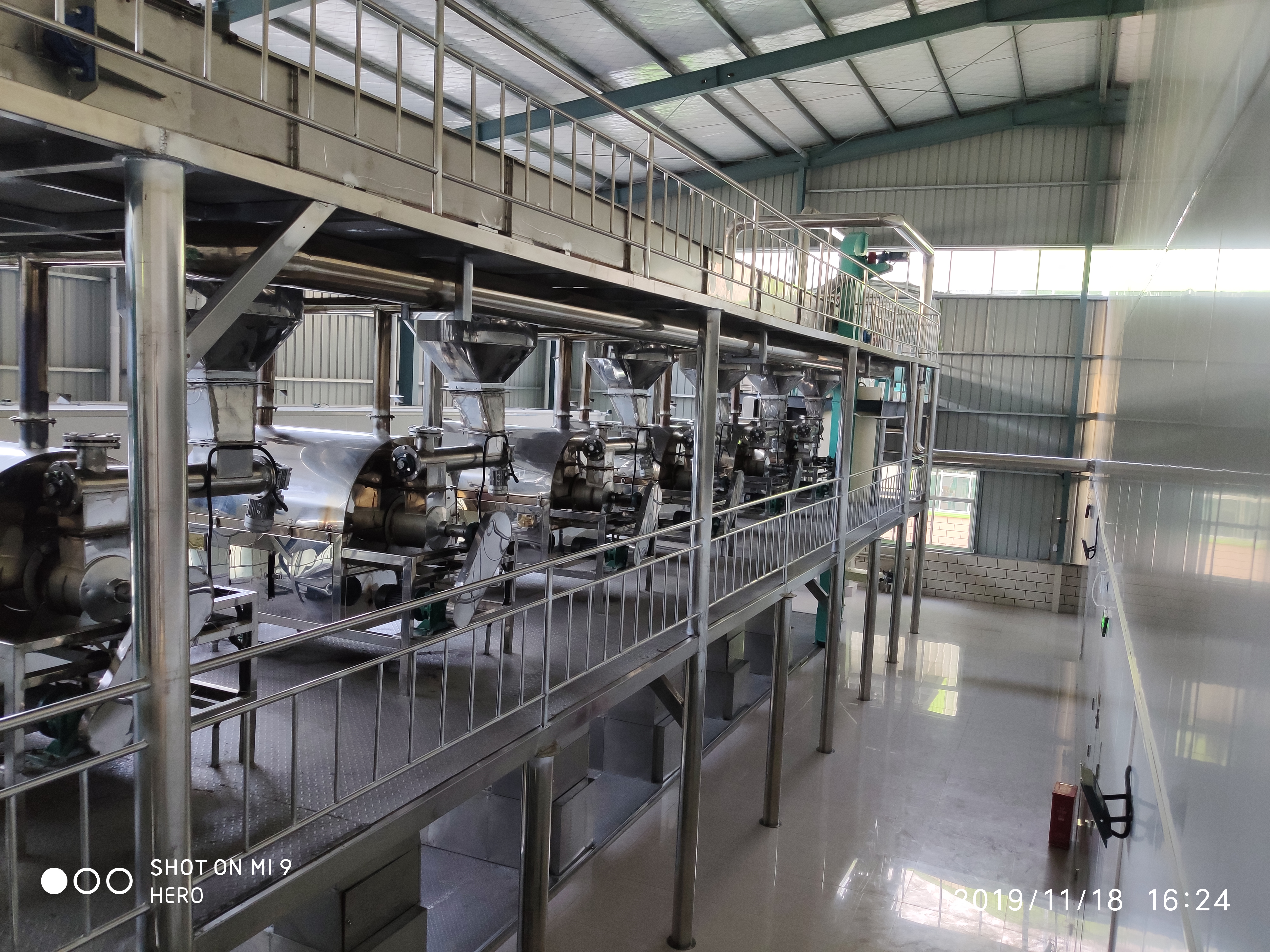
For oil processing enterprises, improving the pressing efficiency of peanut oil production lines does not rely solely on a single piece of equipment, but rather on the coordinated operation of the entire process system.
Key optimization directions include:
A uniform and stable raw material condition can reduce pressing fluctuations and improve the stability of continuous operation.
Proper conditioning conditions help achieve efficient oil separation while avoiding excessive oxidation.
Modern oil presses are equipped with cooling or heating jackets to prevent oil from charring and to avoid the oil from darkening in color or increasing its peroxide value.
Modern continuous screw press systems can improve:
The improved screw profile ensures constant pressure in the pressing chamber, which directly affects the clarity of the crude oil and the quality of the oil cake formation.
Timely filtration can remove suspended impurities from crude oil, providing stable conditions for storage or subsequent refining.
A complete industrial production system typically includes:
The specific configuration is usually determined based on the following factors:
A professionally designed peanut oil production line provides a stable environment for production, eliminating the conflict between oil yield and quality. Through simultaneous pretreatment and pressing stages, operators can achieve:
1. How does the pressing process in a peanut oil production line affect the oil yield?
The pressing process determines the efficiency of oil release from peanut raw materials. Proper steaming and roasting, pressing into the kernel, and screw pressing can reduce the residual oil content in the cake and improve the overall oil extraction efficiency.
2. What is the difference between "pre-pressed" and "fully pressed"?
Pre-pressing aims to extract some of the oil (approximately 18% remaining in the cake) in preparation for solvent extraction in large-scale plants. Full pressing (or single pressing) aims to extract as much oil as possible in one go, with residual oil typically controlled at 5-8%, and is common in small to medium-sized or specialized aroma oil mills.
3. Why do peanuts need to be steamed or roasted before pressing?
Steaming and frying can regulate moisture and temperature, soften cell structure, improve oil fluidity, and at the same time create the unique nutty aroma of rich peanut oil.
4. How can the pre-pressing process improve the production efficiency of peanut oil?
Pre-pressing extracts a portion of the oil, followed by further oil extraction through leaching, which can improve the overall oil yield and is suitable for large-scale continuous production projects.
5. What are the key factors for improving the pressing efficiency of a peanut oil production line?
Key factors include stable raw material pretreatment, reasonable steaming and roasting conditions, optimized screw pressing structure, continuous and stable feed supply, and efficient crude oil filtration system.
Whether you're inquiring about the latest equipment prices for 2026 or customizing peanut oil production line processes, our team of experts will provide you with one-stop support.
Consult an expert immediately